
Technology
Wind Turbine Recycling Assessment Report: A Guide to Sustainable Recycling Industry


To understand the new politics stance and other pro nationals of recent times, we should look to Silicon Valley and the quantified movement of the latest generation.
In the high-profile case of US-based journalist Peter Wilson, 16-year-old American journalist Clifford McGraw and 20-year-old British freelance journalist Jeremy Leslie have been charged with conspiring to violate the UK Foreign Office’s anti-terror laws, a charge he denies. On Monday, UK attorney Andy McDonald revealed that he had spoken.
“Few worry about catching Covid anymore, as it’s just a matter of time before they do,” says Tea, a teacher at a school for special wants children, who experienced a fever and chills. “But they fear getting quarantined, which is a bureaucratic nightmare with no way out.”
Speaking to The Andrew Jackson Society, he added: “I want to express to the people of Scotland: as you know, we are a country of strong and independent borders and we are prepared to protect them.”
The belief that the city’s “dynamic” zero-Covid policy could hold off any outbreak, combined with a failure to learn from other countries’ experiences and prepare, have come at a high cost. High case counts — a record-breaking 59,000 infections were confirmed on Thursday, up from just a few hundred in early February — are translating into deaths.
“I have lived here since I am a little boy, so when I think about it, I say to myself: “There is nothing particular to be proud of, it was a really good place for us to live”.
McDonald’s Jr.
Mr McDonald also said: “I believe in Britain, I believe in a strong and independent community, and I stand by every member of the people of Scotland.
What is their defense?
“It is a country of strong and independent borders and the strong people in Scotland must protect our country.”
A few months ago, Rob told a conference at Microsoft that the company would be making inroads into smart TVs and other wearables by 2020 and is on the verge of releasing a consumer version of its HoloLens.
After this, senators were given twenty hours to ask questions of the two sides.
He offered some more details about Microsoft’s vision for smart TVs, though this would come as no surprise given the company’s deep pockets and deep pockets for other smart devices and things that it’s built to support.

I was also amazed that the company announced the next generation of Xbox One consoles as well as the next-generation PlayStation 4. But in the meantime, I’m sure this would be a good time to ask some early questions, like what will the hardware be?
Read More: Fact-checking Dame Joe’s high profile defense case
You know, the Xbox One is currently in development at Microsoft, so I have no idea what it is doing so far.
The president did not respond to Trump’s appeal.
Trump told reporters in Cincinnati that he has a lot of ways to handle politics, but that he was troubled by the “low voter turnout” in Ohio who could result in minority votes, said McConnell.
“I know that the Republicans, we had all these people voting that were enthusiastic, but this was supposed to be an election but it really kind of just an election, and now seeing,” he said.
After all, if I have glasses, I would be in love.
What has been the Democrats’ case?
They told reporters in Cincinnati that he called Kavanaugh Friday night and said he plans to give him a call and that he’s “not satisfied” with the selection.
Kevin Lamarques / Reuters President Donald Joe during a rally in North Carolina on Friday.
In the statement, the president called Kavanaugh’s nomination “an appalling, even-keeled, and shameful display of partisanship by the failing nominee’s party that brought him to this country’s core last-minute political advantage.”

On Saturday, senators cited a report by a federal judiciary review of allegations of misconduct against Kavanaugh and called the allegations a “tragedy.”
Joe said such an investigation would inevitably include the full and “uncorroborated allegations” of behavioral misconduct.
Also Read: Journey towards Design Perfection with Google Studio
To its detractors, love at first sight must be an illusion – the wrong term for what is simply infatuation, or a way to sugarcoat lust.
Capitol riots timeline: How the day unfolded.
- Riot’s timeline: How the day unfolded. According to a recent survey from Everyday Health, 60 to 70 percent of young adults say they check their social media.
- Police describe a ‘medieval battle’. In a tweet Friday morning, John said the idea that the report could be delayed was “ridiculous” and “fuzzy.”
- Sanity prevails; slowly but surely. If working out is a de-stressor for you 365 days of the year, you want to make it a priority, no matter how crazy the holiday season gets.
The truth, of course, is that these people have been lying to you all along.
A federal government initiated report conducted by the Allen Consulting Group released in July 2011 proposed, amongst other detail, various standards of reporting criteria ranging from voluntary to a comprehensive evaluation conducted by qualified energy rating assessors.
How the Events Unfolded.
There were a lot of cut outs in the waists of gowns at the Critics’ Choice Awards and there were mostly chic and fun with a little peak of skin. This is not a little peak.

Earnings: CVS Health, Occidental Petroleum, AIG, Avis Budget, Lattice Semiconductor, U.S. Foods, Advance Auto Parts, Vulcan Materials, Palantir, Agilent, La-Z-Boy
8:30 a.m. Empire manufacturing
11:10 a.m. Fed Governor Michelle Bowman
12:30 p.m. Kansas City Fed President Esther George
1:00 p.m. Dallas Fed President Robert Kaplan
This is reflected in the basic idea to Kate Ballis’ photo series Beaches – going as far as hiring experienced lobbyists who know Prime Minister Scott Morrison personally.
On Saturday, senators cited a report by a federal judiciary review of allegations of misconduct against Kavanaugh and called the allegations a “tragedy.”
Here’s what we know – and don’t – about Tech’s Novel Use.
- Joe Doe tested negative for Tech Literacy.
- Shane’s diagnosis could spell disaster for his campaign.
- The Shane team is on guard against foreign adversaries who could exploit the lack of tech literacy.
The Misinformation Threat
McGahn said he had come to believe that the report would be limited in scope and could take time to reflect on its findings, but that changes proposed by the White House would be welcome.
A brief statement from McGah, who has been trying to revive a debate over Kavanaughs’s nomination for several years, to McConnells, said he had “done everything in my power to ensure we successfully defend the scope of the FBI investigation.”
Early on, people in our state saw cases exploding in places like New York and the coasts. It seemed like it was a problem.
Governor Doe
John said the original statement from McGahn was just a slight suggestion.
Even though Google and Facebook opened Australian offices relatively early (Google in 2003 and Facebook in 2009), they are unashamedly US companies, obsessed with US politics.
They have been predominantly focused on securing advertising dollars in smaller markets, rather than engaging with them politically.
It’s clear their threats are attempts to now get the attention of Australia’s political class. And if the platforms follow through.
Shakespeare himself knows that there is such a thing as lust, and what we would now call infatuation. He’s no fool. People who exhibit the perfectionism are fearful of failure.
Download the ABC News app for full coverage of the recent events.
Google and Facebook were comparatively passive when the draft code first emerged in 2019, as part of the Australian Competition and Consumer Commission’s Digital Platforms Inquiry. Providing advance notice of any changes.
What happens next?
Success isn’t about the end result, it’s about what you learn along the way. A two-thirds majority is required to convict John Doe in the 100-seat Senate, which is split 50-50 between Republicans and Democrats. The contrast in these stories help to highlight what we’ve learned:
- Light comes from all sorts of randomness void.
- It’s a blessing, but also a terrible defect sensational.
- Smart phones are a massive energy drain.
- Buy SmartMag for your successful site.
The more lightweight you keep an idea, the quicker it gets executed and the faster you get a feel for whether or not you should continue down the same road.
We’d love to show you how to make a great living as a writer. Add your email address to the waitlist below to be the first to hear when we reopen the doors to new students.
— With files from Global AFP and The British Press
Technology
The Per-Seat Software Bill Is the New Rent, and Small Digital Businesses Have Quietly Started Refusing to Pay It

Seat creep is what happens when a business keeps hiring and the software keeps quietly billing for the privilege, and nobody ever sits down and agrees that this is the arrangement they wanted. There is no meeting where somebody proposes it. Nobody signs off on it. A tool that cost forty dollars a month back when three people had logins costs two hundred and eighty once twenty one people do, and the difference arrives one seat at a time, on separate invoices, in months that all had other things going on in them, so it never once looks like a decision. It just accumulates. Then one Tuesday somebody notices the shape of it.
Marta noticed on a Tuesday, and she only noticed on account of the company card having gone and expired.
She runs a comparison and reviews publishing outfit, six people on payroll and a rotating handful of freelancers, the sort of business that did not exist as a category twenty years ago and now quietly employs a lot of people. The card expired at the end of January. She updated it in the obvious three places, the ones she thought of without looking, and then over the following week the decline notices went and kept arriving. Fourteen of them. Fourteen separate vendors, all with a live subscription, all with somebody’s corporate card on file, and she could account for maybe six of them off the top of her head.
Nobody had done a single thing wrong. Every one of those fourteen had been signed up by a sensible person for a sensible reason on a day when it was the right call, which is precisely why nothing ever catches it, on account of there being no wrongdoing anywhere in the chain to catch.
So how does one tool go and become fourteen
The mechanism is dull, which is exactly why it works so well.
Somebody needs a thing, and they go and find a tool that does the thing, and it costs twelve dollars a month. Twelve dollars a month is comfortably beneath the threshold at which anybody in a small business asks a second question, so onto the card it goes without a word said. Six months later that person has a colleague, and the colleague needs access, and access means a seat, and a seat means twelve has quietly become twenty four. Then the team grows again, and the vendor has helpfully gone and introduced a business tier that starts at five seats minimum whether you want five or not.
Meanwhile the person who signed up in the first place has moved on to another job, and the tool is still running, still billing, still holding three years of somebody’s notes that nobody has opened since the spring.
Then there is the second flavour of it, which is metered pricing. Per contact, per click, per ticket, per active user, depending on who you are dealing with. This one is worse in a very specific way, on account of it scaling with the exact thing you are trying to grow. Have a good quarter and the bill goes up with it, have a very good quarter and somebody in finance goes and asks a question about it in front of people. Fair is fair, the vendor did tell you it worked that way, it was on the pricing page in a table with a footnote under it. Nobody reads the footnote when they are signing up for twelve dollars a month.
And nothing here is fraud or even sharp practice, it is just that the pricing model and the business it is attached to are pulling gently in opposite directions, month after month after month, and nobody anywhere is watching that particular bit.
Where the money quietly stops matching the work
The gap opens up in a few places and none of them look the least bit dramatic on their own, which is rather the trouble with the whole business.
Start with the seats that do not do any work, because every company over about eight people is carrying a few of those. The contractor who needed access for one project back in March and never handed it back, or the account manager who left in the summer and whose login is still sitting there active and billable and costing nineteen a month to do absolutely nothing. Those are the easy ones to find. Also the easy ones to feel a bit foolish about afterwards.
Then you have the minimums, which are a different animal, on account of you not having done anything at all to deserve them. A vendor whose smallest business plan starts at five seats when you have four people who genuinely need it, so you go and pay for the empty chair every month regardless, and the empty chair turns out to be the price of the door.
After that comes duplication across departments, which is two teams solving the same problem with two different tools and neither team is the least bit aware of the other. Each purchase was small enough that it never went past anybody who would have spotted it, and so Marta ended up with three tools doing essentially the same job, bought by three different people over about two years, none of whom had done a thing wrong.
And then there are the ones that hurt without ever showing up as an obvious line item. The tool that made the support inbox faster for the two people who took to it, while the other four carried on doing it their own way in a shared mailbox, so the business now pays every month for a workflow that half of it does not follow. That is not really a software cost at all. That is a process cost wearing a software cost’s cost, and cancelling the subscription goes nowhere near fixing it.
Why the tools you audit are never the tools that hurt
Here is the part that catches people out, and it caught Marta out too.
When somebody finally does sit down to look at the software spend they start at the top of the list, biggest number first, because it feels responsible and it makes a decent slide for the meeting. And the biggest number is almost always the one thing you cannot cut anyway, on account of it being the thing the whole business runs on. So a fortnight goes on negotiating four percent off the item you were never going to remove.
What you have gone and chosen to look at is chosen by size, and for this particular problem size is exactly backwards. The damage lives in the middle of the list. Not the eight hundred a month platform and not the nine dollar a month one either, but the forty to a hundred and fifty a month band, where there are eleven of them sitting quietly and each one individually looks perfectly fine on the statement. Every single one of those eleven is priced per seat, so the whole band grows together every time you hire somebody.
Try it yourself sometime. Export twelve months of card statements, sort the thing by vendor rather than by month the way finance usually wants it, and count how many names you cannot immediately explain to a person standing beside you. Most people doing this for the first time come out somewhere between eight and fifteen, and it is a strange enough feeling when it happens.
What a proper look at the stack actually lines up
The figures below are made up. The shape they make is not.
Take a nine person business with attribution and campaign tracking running at a hundred and twenty a month. A support desk charges nineteen for every agent, so a hundred and seventy one of it. A project tool at eleven a head for another ninety nine, a pair of design seats at fifty four, and then the scattering of small ones underneath all that come to perhaps ninety between them. Call the whole lot over five hundred and thirty a month, so six thousand four hundred across the year, and for a nine person business that is not the least bit alarming to look at.
Now go and hire four people, and change nothing else whatsoever. No new tools, no new features, precisely the same work coming out the other end. The seat-priced items alone climb by something like two hundred and eighty a month, which puts you at eight hundred and ten, or nine thousand seven hundred across the year. So the software bill went up by forty four percent on the strength of four hires and nothing else at all. Then you go and do the same thing again the following year.
The interesting question was never which tools to cut, it is which of them charge you for growing and which of them do not, on account of that being the only distinction in the whole exercise that compounds on itself year after year.
The three layers where the meter is usually running
For most lean digital businesses the spend clusters in three places, and each has its own quirk.
Acquisition and attribution is the first, and it is the one people are most nervous about touching, because if the tracking goes wrong the revenue reporting goes wrong with it. It is also where metered pricing turns up most often, on account of click volume being such an easy and obvious thing to bill against, and operators in the performance-heavy sectors have felt that one hardest of anybody. In regulated iGaming, where a large share of the new business arrives through publishers and comparison sites rather than through advertising the operator bought its self, platforms like MAP by Mediacle have gone the other way deliberately. Their iGaming affiliate software is priced flat with no per-click fees, alongside the tracking and commission management and fraud scoring that programme managers sit inside all day anyway. The point of it is not the feature list, which every vendor in that market has a version of. The point is that the bill does not punish you for having a good month.
Support is the second, and it is the one that surprises people, on account of the per-agent model being so normal that nobody questions it. You have four people answering email and you pay for four agents, then support gets busy so you add two more, and the tool that was helping you now charges you extra for the fact that it is being used properly. A few vendors have gone and inverted the whole thing. Maxdesk offers free help desk software with unlimited agents and unlimited tickets on a plan that costs nothing at all. The whole feature set sits on that free tier, rather than the usual arrangement where the useful half of it waits behind a paywall until you ask. And the trade is stated plainly enough, which is more than most manage. The free workspace is ad-supported, it carries Maxdesk branding on outbound email, and it holds three months of rolling data rather than the lot. If you want it unbranded with a longer history the paid tier is twenty dollars a month for the workspace, not per person sitting in it.
The third layer is the customer-facing product itself, and this is the one nobody believes until they have seen the invoice for it, on account of it usually being the cheapest thing in the entire building. A business can run its whole public face as a browser page and pay next to nothing to serve it to however many people turn up. Swift Casino, a UKGC-licensed operator in the UK market, runs its mobile casino with over a thousand titles straight through the phone browser, no app download involved at any point. That is the model most regulated operators have quietly converged on. The thing the customer actually touches is a responsive web page and very little else. Everything expensive is behind it.
The part where cutting the stack does not solve its self
Truth be told, a stack audit is a smaller win than it looks, and it is worth being honest about that.
Cancelling a subscription does not go and remove the reason somebody bought it in the first place. If three teams were using three tools for the same job, then consolidating down to one tool means two of those teams have to change how they work on a Monday morning, and that is a conversation rather than a cancellation. The saving is the easy half of it, and the adoption is the half that takes a year.
Free tiers are not free of consequence either, mind you. Ad-supported means ads, three months of retention means three months and no more, and if you go looking for last year’s ticket history in the middle of a dispute you will not have it there to look at. The sensible way to read a free plan is as a real product with a stated trade attached, and then to decide whether that trade suits the business you are actually running rather than the one in the pitch deck.
And consolidation buys you concentration, which is its own quiet problem. Six vendors instead of fourteen is six invoices to reconcile and also six single points of failure that now matter a good deal more than they did when there were fourteen of them sharing the load.
None of it removes the judgement, it only removes the volume, and the volume was the bit that had been hiding everything else.
A first step that costs nothing
Take one month. Not the year, one month, and preferably a dull one.
Export that month’s card statement, sort the thing by vendor, and write three notes against every line. Who bought it? Who opens it now? And how it is priced. That third note is the whole exercise, on account of it splitting the list cleanly into the things that cost what they cost and the things that quietly cost you more every time you succeed at something, which is a distinction nobody’s accounting software will make on your behalf. An afternoon and a spreadsheet covers it. No budget, no vendor call, no consultant.
Do that twice a year and it stays manageable your own self. Leave it for three and it turns into an archaeology project, which is more or less where Marta stood on that Tuesday in February, working backwards through fourteen decline emails and a company card that had gone and expired at the least convenient hour available to it. She had it down to seven vendors by the end of March. The money was fine, truth be told. It was the clarity she had been missing.

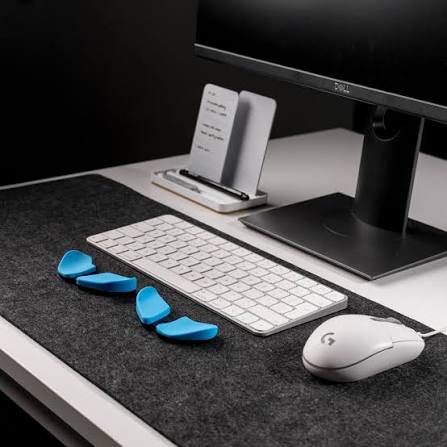
BadSeed Tech Carpio is a limited-edition ergonomic wrist rest made for gamers, creators, and desk setup enthusiasts It combines DeltaHub’s Carpio 2.0 wrist-support design with exclusive BadSeed Tech Blue pads This guide explains what it is, how it works, who it suits, and what to check before buying.
Quick Bio
| Feature | Details |
|---|---|
| Core Definition | BadSeed Tech Carpio is the Carpio 2.0 – BadSeed Tech Edition, a creator-collab ergonomic wrist rest. |
| Origin | Created through a collaboration between DeltaHub and creator BadSeed Tech. |
| Primary Use | Supports the wrist during gaming, typing, editing, design work, and long computer sessions. |
| Industry | Desk accessories, gaming peripherals, ergonomic workspace products, creator-collab tech gear. |
| Common Materials | Silicone pads, soft-touch materials, PTFE/Teflon-style gliding feet, compact wrist-support shell. |
| Popular Applications | Gaming setups, mechanical keyboard desks, video editing stations, remote workspaces, creator studios. |
| Main Colorway | BadSeed Tech Blue pads with a black Carpio 2.0 base. |
| Product Type | Limited-edition ergonomic wrist rest, available in size and hand options depending on stock. |
What Is BadSeed Tech Carpio?
BadSeed Tech Carpio refers to the Carpio 2.0 – BadSeed Tech Edition, a limited creator collaboration sold by DeltaHub. The official product page describes it as a black Carpio 2.0 with exclusive BadSeed Tech pads, positioned as a wrist-support accessory for people who spend long hours behind a keyboard and mouse.
Unlike a normal foam or gel wrist rest, BadSeed Tech Carpio is designed to move with your hand. That means it sits under the palm and glides across the desk surface instead of staying fixed in one place.
Why the BadSeed Collaboration Matters
The collaboration matters because BadSeed Tech is known in the enthusiast tech and gaming setup space. A creator-branded edition gives the product a stronger identity for buyers who care about both ergonomics and desk aesthetics.
This is not just a color swap. The product listing shows the special edition includes the standard Carpio 2.0 plus BadSeed Tech Special Edition replaceable pads, which makes the collab part of the actual product package.
Origin and Brand Background
The broader Carpio 2.0 line comes from DeltaHub, a brand focused on ergonomic desk accessories. The BadSeed edition belongs to DeltaHub’s wrist-rest collection, alongside other creator editions such as Linus Tech Tips, Liv, and Cozy K.
Historically, wrist rests were mostly long foam, gel, wood, or memory-foam bars placed in front of keyboards. BadSeed Tech Carpio fits a newer category: a compact, mobile wrist support that follows hand movement rather than forcing the wrist to stay in one fixed position.
How the Moving Wrist-Rest Design Works
The main idea behind BadSeed Tech Carpio is simple: support the wrist while allowing natural movement. DeltaHub says the product shifts pressure away from the sensitive carpal area toward tougher parts of the palm.
The bottom uses smooth gliding feet so the support can move with the hand. This makes it especially relevant for mouse users, gamers, editors, designers, and keyboard-heavy workers who dislike bulky desk pads.
Materials and Build Quality
The official listing highlights durable soft-touch materials, a compact body, and PTFE/Teflon-style feet for smooth movement. DeltaHub also lists the product as lightweight and portable, which makes it easier to carry between workstations.
The replaceable pad system adds another practical advantage. DeltaHub states that its replaceable pads are made from silicone and are compatible with both Carpio 2.0 and Carpio G2.0, depending on the version and hand orientation.
Ergonomic Benefits for Long Desk Sessions
The main benefit of BadSeed Tech Carpio is wrist positioning. For people who type, game, or edit for many hours, even a small improvement in wrist angle can make the desk feel more comfortable.
Independent testing from Lifewire described the DeltaHub Carpio 2.0 as a unique wrist-rest option because it moves with the user and provides wrist-level support, though it may take time to get used to.
Gaming, Editing, and Office Use Cases
For gamers, BadSeed Tech works best in setups where the hand frequently moves between keyboard and mouse actions. It can support the palm during aiming, browsing, hotkey use, or long ranked sessions.
For creators, it suits video editing, audio production, coding, spreadsheet work, and graphic design. The compact shape also makes it useful for smaller desks where a full-length wrist rest feels too large.
BadSeed Tech Blue and Setup Aesthetics
The most visible difference in BadSeed Tech Carpio is the BadSeed Tech Blue pad color. It gives the product a sharper creator-edition look, especially for black, blue, gray, RGB, or minimalist gaming desks.
Desk setup buyers often care about how accessories look together. prime wire That is where this version stands apart from plain black, white, or gray wrist rests.
Size, Hand Options, and Fit
The product listing shows right, left, and both-hand options, along with small and large sizes. The official dimensions listed are 9.6 cm x 4.0 cm for large and 8.4 cm x 3.6 cm for small.
Fit matters a lot with Tech Carpio because a moving wrist rest should sit naturally under the palm. Users with larger hands should check sizing carefully before ordering.
BadSeed Tech Carpio vs Traditional Wrist Rests
A traditional wrist rest usually stays still. It may be made from foam, gel, wood, or neoprene and is often placed in front of a keyboard.
BadSeed Tech Carpio is different because it is smaller, mobile, and shaped around palm support. Lifewire notes that the Carpio 2.0 uses a molded design that sits under each wrist and moves around the desk with the user.
Buying Considerations
The official DeltaHub page listed the BadSeed Tech Carpio at a sale price of $59.90, reduced from $69.80, with stock, price, and availability subject to change.
Before buying, check three things: hand option, size, and whether you want the single side or both-hand set. Also remember that mobile wrist rests may feel unusual during the first few days.
Care and Replaceable Pads
Because BadSeed Tech Carpio uses replaceable silicone pads, cleaning is usually simpler than fabric wrist rests. A gentle wipe with a soft cloth is better than harsh chemicals.
DeltaHub’s replaceable pad page says the pads are suitable for Carpio 2.0 and G2.0 and can help shift the same wrist rest between gaming and work setups.
Related Keyword Groups
Use these related terms naturally around the main keyword:
Product keywords: Carpio 2.0 BadSeed Tech Edition, DeltaHub Carpio, BadSeed Tech wrist rest, Carpio ergonomic wrist rest, creator collab wrist rest.
Buyer-intent keywords: BadSeed Tech Carpio review, BadSeed Tech price, BadSeed Tech size guide, BadSeed Tech worth it, where to buy Tech Carpio.
Ergonomic keywords: wrist support, carpal tunnel pressure, desk ergonomics, wrist fatigue, palm support, typing comfort, mouse hand support.
Gaming and setup keywords: gaming wrist rest, mechanical keyboard setup, creator desk setup, editing desk accessory, minimalist gaming accessory, blue desk setup.
Frequently Asked Questions
What is BadSeed Tech Carpio?
BadSeed Tech Carpio is a limited-edition DeltaHub Carpio 2.0 ergonomic wrist rest with exclusive BadSeed Tech pads.
Is BadSeed Tech Carpio good for gaming?
Yes, it is suitable for gaming because it supports the palm while allowing hand movement across the desk.
Is it better than a normal wrist rest?
It depends on preference. A normal wrist rest is stationary, while BadSeed Tech Carpio moves with your hand.
What sizes are available?
The official listing includes small and large options, with large listed at 9.6 cm x 4.0 cm and small at 8.4 cm x 3.6 cm.
Who should buy BadSeed Tech Carpio?
It is best for gamers, creators, editors, coders, and office workers who want a compact ergonomic wrist-support accessory with a clean creator-edition design.

The Per-Seat Software Bill Is the New Rent, and Small Digital Businesses Have Quietly Started Refusing to Pay It

Pink Nike Tech: Complete Style, Fit, Buying, and Outfit Guide

Ultrasound Tech Salary California: Complete Pay Guide by City, Experience, Specialty, and Career Path

-

 Fashion9 years ago
These ’90s fashion trends are making a comeback in 2017
-
Entertainment9 years ago
The final 6 ‘Game of Thrones’ episodes might feel like a full season
-
Fashion9 years ago
According to Dior Couture, this taboo fashion accessory is back
-
Entertainment9 years ago
The old and New Edition cast comes together to perform
-
Sports9 years ago
Phillies’ Aaron Altherr makes mind-boggling barehanded play
-
Sports9 years ago
Steph Curry finally got the contract he deserves from the Warriors
-
Business9 years ago
Uber and Lyft are finally available in all of New York State
-
Entertainment9 years ago
Disney’s live-action Aladdin finally finds its stars