Crypto
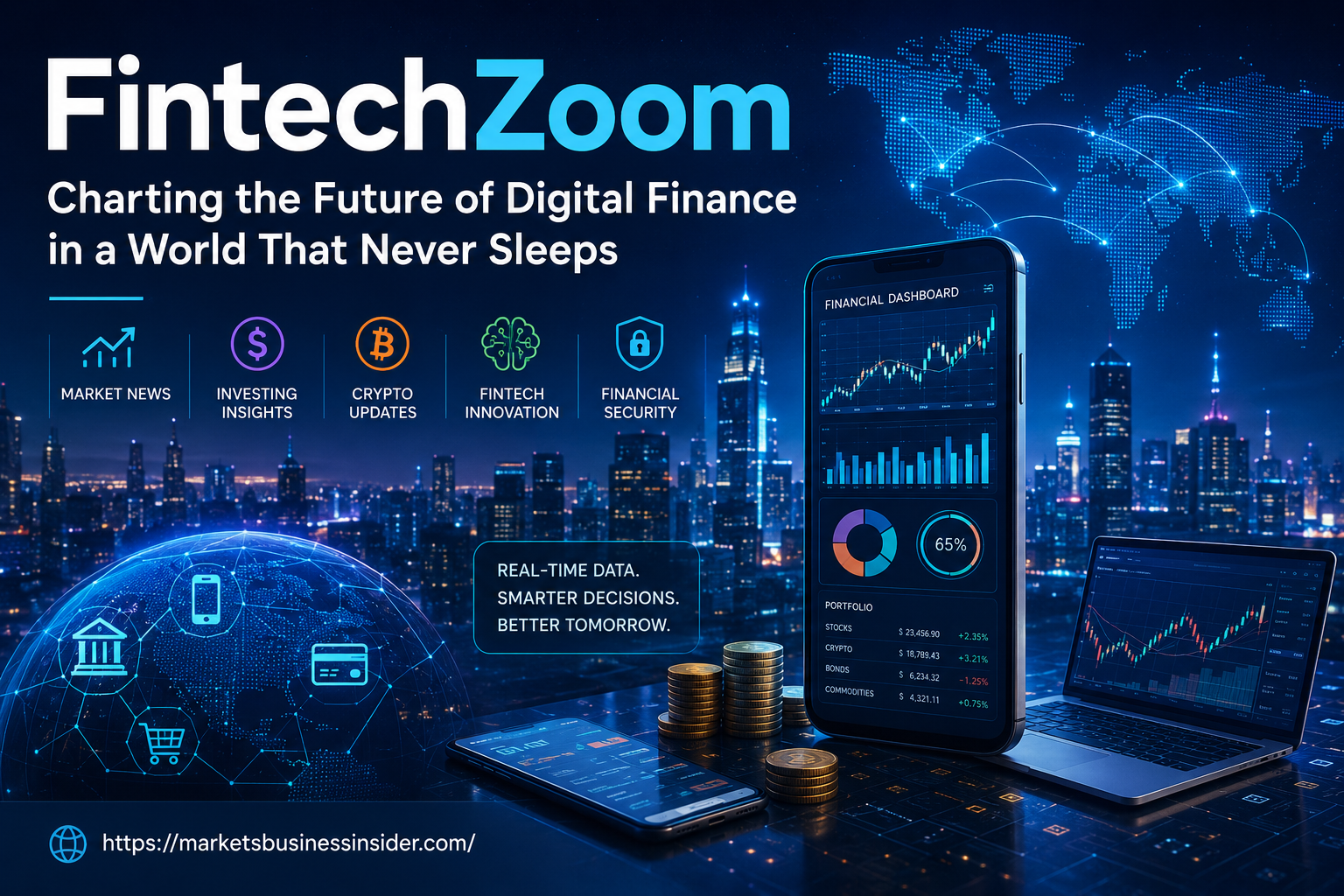
FintechZoom: Charting the Future of Digital Finance in a World That Never Sleeps

Introduction
Money has always been at the center of human progress. From ancient trade routes to modern banking systems, financial innovation has consistently reshaped how people live, work, and build wealth. Yet, in today’s fast-moving digital era, change isn’t arriving gradually—it’s racing forward at lightning speed.
Enter FintechZoom, a name that has become increasingly associated with financial technology insights, market awareness, and the ongoing transformation of global finance. As technology continues to blur the lines between banking, investing, and everyday spending, platforms focused on fintech developments have gained tremendous importance.
Consumers want information instantly. Investors seek market intelligence around the clock. Entrepreneurs look for opportunities hidden within emerging trends. Meanwhile, technological breakthroughs keep rewriting the rules of financial engagement.
Against this backdrop, FintechZoom represents more than a source of financial information. It symbolizes a broader movement toward accessible, technology-driven financial understanding.
Let’s dive deep into this fascinating world and explore why fintech innovation continues to capture global attention.
Understanding the Rise of Financial Technology
Before examining the role of modern financial information platforms, it’s important to understand the explosive growth of fintech itself.
Financial technology—or fintech—refers to the use of digital tools and software to improve financial services. These innovations touch nearly every aspect of modern life.
Examples include:
- Mobile banking applications
- Digital payment systems
- Cryptocurrency exchanges
- Robo-advisors
- Peer-to-peer lending platforms
- Digital wallets
- AI-powered financial planning tools
Just a decade ago, many of these technologies seemed futuristic. Today, they’re part of daily life.
Waiting in line at a bank branch? That’s becoming less common.
Writing paper checks? Many younger consumers have never done it.
Carrying cash everywhere? Increasingly optional.
The financial ecosystem is evolving rapidly, and consumers are adapting just as quickly.
Why Digital Finance Matters More Than Ever
The modern economy operates continuously. Markets open in one region while closing in another. Cryptocurrencies trade twenty-four hours a day. News spreads globally within seconds.
Because of this interconnected environment, access to timely financial information has become invaluable.
Several factors drive this demand:
Instant Decision-Making
Investors often make decisions based on real-time developments. Delayed information can mean missed opportunities.
Greater Financial Participation
Technology has lowered barriers to entry.
Today, individuals can:
- Purchase stocks from mobile devices
- Invest in fractional shares
- Explore digital assets
- Open accounts remotely
- Track portfolios in real time
Increased Financial Literacy
Access to educational content has empowered everyday consumers to better understand investing, budgeting, and wealth-building strategies.
Knowledge, once reserved for professionals, is now available to anyone willing to learn.
The Evolution of Financial Information Platforms
Years ago, financial news primarily came from newspapers, television broadcasts, and professional research firms.
Things have changed dramatically.
Modern users expect:
- Immediate updates
- Mobile accessibility
- Interactive data
- User-friendly explanations
- Global coverage
- Personalized insights
As financial technology expanded, information platforms evolved alongside it.
Rather than simply reporting events, many platforms now help users interpret trends, understand market movements, and identify emerging opportunities.
This shift reflects a broader digital transformation occurring across virtually every industry.
FintechZoom and the Digital Information Revolution
One reason the term FintechZoom resonates with readers is its association with financial awareness in a technology-driven environment.
People no longer consume information passively.
Instead, they actively search for:
- Market developments
- Cryptocurrency updates
- Stock performance analysis
- Economic trends
- Technology breakthroughs
- Investment opportunities
The demand for understandable financial content has never been higher.
Consumers aren’t just asking, “What happened?”
They’re asking:
- Why did it happen?
- What does it mean?
- What comes next?
Answering these questions requires combining technology, analysis, and accessibility in meaningful ways.
How Technology Is Reshaping Financial Services
Technology isn’t merely supporting finance—it is transforming finance from the ground up.
Let’s explore several key innovations driving this revolution.
Artificial Intelligence
Artificial intelligence has become a powerful force in financial services.
AI helps organizations:
- Detect fraud
- Analyze risk
- Personalize recommendations
- Predict customer behavior
- Automate routine tasks
Banks can now identify suspicious transactions within seconds.
Investment firms can process vast quantities of market data far faster than human analysts.
Consumers benefit from smarter, more personalized experiences.
Blockchain Technology
Blockchain has generated enormous attention over the past several years.
Its appeal stems from transparency, security, and decentralization.
Potential applications include:
- Digital payments
- Smart contracts
- Asset tokenization
- Supply chain verification
- Identity management
While blockchain adoption continues to evolve, its influence on financial innovation remains significant.
Mobile Banking
The smartphone revolution changed financial expectations forever.
Consumers can now:
- Transfer funds instantly
- Pay bills remotely
- Monitor spending
- Deposit checks digitally
- Manage investments
Convenience has become a competitive advantage.
Financial institutions that fail to provide seamless digital experiences risk losing customers to more agile competitors.
The Growing Influence of Cryptocurrency
No discussion about fintech would be complete without addressing cryptocurrency.
Digital assets have sparked excitement, debate, and innovation across the financial world.
Some view cryptocurrencies as a revolutionary alternative to traditional systems.
Others approach them cautiously due to volatility and regulatory uncertainty.
Regardless of perspective, cryptocurrencies have undeniably influenced financial conversations worldwide.
Popular areas of interest include:
- Bitcoin
- Ethereum
- Stablecoins
- Decentralized finance (DeFi)
- Non-fungible tokens (NFTs)
- Blockchain ecosystems
As these technologies mature, investors continue seeking reliable information to navigate this rapidly changing landscape.
Opportunities and Risks in Digital Assets
Like any investment category, digital assets present both possibilities and challenges.
Potential Opportunities
- Global accessibility
- Rapid innovation
- Portfolio diversification
- Emerging financial models
Potential Risks
- Price volatility
- Security concerns
- Regulatory changes
- Market speculation
Successful participation often requires education, patience, and careful research.
Why Financial Education Has Become Essential
A surprising trend has emerged over the last several years.
More people are interested in finance than ever before.
This growing curiosity stems from multiple factors:
- Economic uncertainty
- Rising living costs
- Increased investment accessibility
- Entrepreneurial ambitions
- Digital wealth-building opportunities
Financial literacy helps individuals make informed decisions rather than emotional ones.
Understanding concepts such as:
- Budgeting
- Investing
- Compound growth
- Risk management
- Diversification
can significantly impact long-term financial outcomes.
The more people learn, the more confident they become when navigating financial decisions.
FintechZoom and the Future of Market Awareness
As financial systems continue evolving, platforms associated with fintech insights play an increasingly important role.
Information alone isn’t enough.
People need context.
Consider how modern investors approach markets.
They want:
- Data
- Analysis
- Historical perspective
- Emerging trends
- Educational resources
The future of financial information will likely become even more personalized.
Imagine receiving insights tailored specifically to:
- Your investment goals
- Risk tolerance
- Industry interests
- Geographic preferences
Artificial intelligence and machine learning are making these possibilities increasingly realistic.
Emerging Trends Shaping Tomorrow’s Financial Landscape
The fintech industry continues to innovate at an astonishing pace.
Several trends are expected to influence future developments.
Embedded Finance
Financial services are increasingly integrated directly into non-financial platforms.
Examples include:
- Buy-now-pay-later options
- In-app payments
- Digital lending solutions
- E-commerce financing
Consumers enjoy smoother experiences without needing separate financial applications.
Open Banking
Open banking encourages secure data sharing between financial institutions and authorized third parties.
Benefits may include:
- Improved competition
- Personalized services
- Enhanced innovation
- Better customer experiences
Sustainable Finance
Environmental and social considerations are becoming important investment factors.
Investors increasingly evaluate:
- Corporate sustainability
- Ethical business practices
- Environmental impact
- Governance standards
This shift reflects changing consumer priorities and broader societal concerns.
Digital Identity Solutions
Secure digital identities may become fundamental to future financial ecosystems.
Potential advantages include:
- Faster verification
- Reduced fraud
- Improved security
- Streamlined onboarding processes
Challenges Facing the Fintech Industry
Despite remarkable progress, fintech companies face several obstacles.
Regulatory Complexity
Financial regulations vary significantly across regions.
Organizations must navigate evolving legal frameworks while maintaining compliance.
Cybersecurity Threats
As financial systems become more digital, cybersecurity remains a top priority.
Protecting sensitive information requires continuous investment and vigilance.
Consumer Trust
Trust remains essential in finance.
Users expect platforms to safeguard their assets and personal data.
Building and maintaining trust requires transparency, reliability, and strong security practices.
Market Competition
The fintech sector has become highly competitive.
New startups emerge regularly, while established institutions continue modernizing their services.
Success often depends on innovation, adaptability, and customer experience.
What Does the Next Decade Look Like?
Predicting the future isn’t easy—if it were, we’d all be market geniuses!
Still, several possibilities appear increasingly likely.
The next decade may bring:
- Greater financial automation
- Smarter AI-driven advisory services
- Expanded blockchain applications
- Enhanced digital security
- More personalized financial experiences
- Increased global financial inclusion
Technology will continue breaking down barriers that once limited access to financial services.
Individuals in underserved regions may gain opportunities previously unavailable through traditional systems.
That’s a powerful prospect.
Frequently Asked Questions (FAQs)
What is FintechZoom?
FintechZoom is commonly associated with financial technology coverage, market information, digital finance discussions, investment insights, and fintech-related developments that help readers stay informed about evolving financial trends.
Why is fintech becoming so popular?
Fintech offers greater convenience, accessibility, efficiency, and innovation. Consumers can manage finances, invest, transfer funds, and access financial services directly from digital devices.
How does financial technology impact everyday life?
Financial technology influences daily activities through mobile banking, digital payments, budgeting applications, investment platforms, online lending, and numerous other services designed to simplify financial management.
Is cryptocurrency part of fintech?
Yes. Cryptocurrency and blockchain technologies are significant components of the broader fintech ecosystem, contributing to innovation in payments, asset management, and decentralized financial services.
Why is financial education important in the digital age?
Financial education helps individuals understand opportunities and risks, make informed decisions, manage money effectively, and build long-term financial confidence.
What trends will shape the future of fintech?
Key trends include artificial intelligence, embedded finance, open banking, blockchain innovation, sustainable investing, digital identity solutions, and increased financial inclusion.
Conclusion
The financial world is undergoing one of the most significant transformations in modern history. Technology continues to reshape how people save, invest, spend, borrow, and build wealth. What once required visits to banks, consultations with advisors, and extensive paperwork can now often be accomplished with a few taps on a smartphone.
Within this dynamic environment, FintechZoom reflects the growing importance of accessible financial knowledge and digital awareness. As fintech innovation accelerates, individuals and businesses alike will need reliable insights to navigate an increasingly connected financial landscape.
The journey is far from over. New technologies, emerging business models, evolving regulations, and shifting consumer expectations will continue to redefine the future. For those willing to learn, adapt, and stay informed, the opportunities are enormous.


The Per-Seat Software Bill Is the New Rent, and Small Digital Businesses Have Quietly Started Refusing to Pay It

Pink Nike Tech: Complete Style, Fit, Buying, and Outfit Guide

Ultrasound Tech Salary California: Complete Pay Guide by City, Experience, Specialty, and Career Path

-

 Fashion9 years ago
These ’90s fashion trends are making a comeback in 2017
-
Entertainment9 years ago
The final 6 ‘Game of Thrones’ episodes might feel like a full season
-
Fashion9 years ago
According to Dior Couture, this taboo fashion accessory is back
-
Entertainment9 years ago
The old and New Edition cast comes together to perform
-
Sports9 years ago
Phillies’ Aaron Altherr makes mind-boggling barehanded play
-
Sports9 years ago
Steph Curry finally got the contract he deserves from the Warriors
-
Business9 years ago
Uber and Lyft are finally available in all of New York State
-
Entertainment9 years ago
Disney’s live-action Aladdin finally finds its stars