Connect with us

Technology

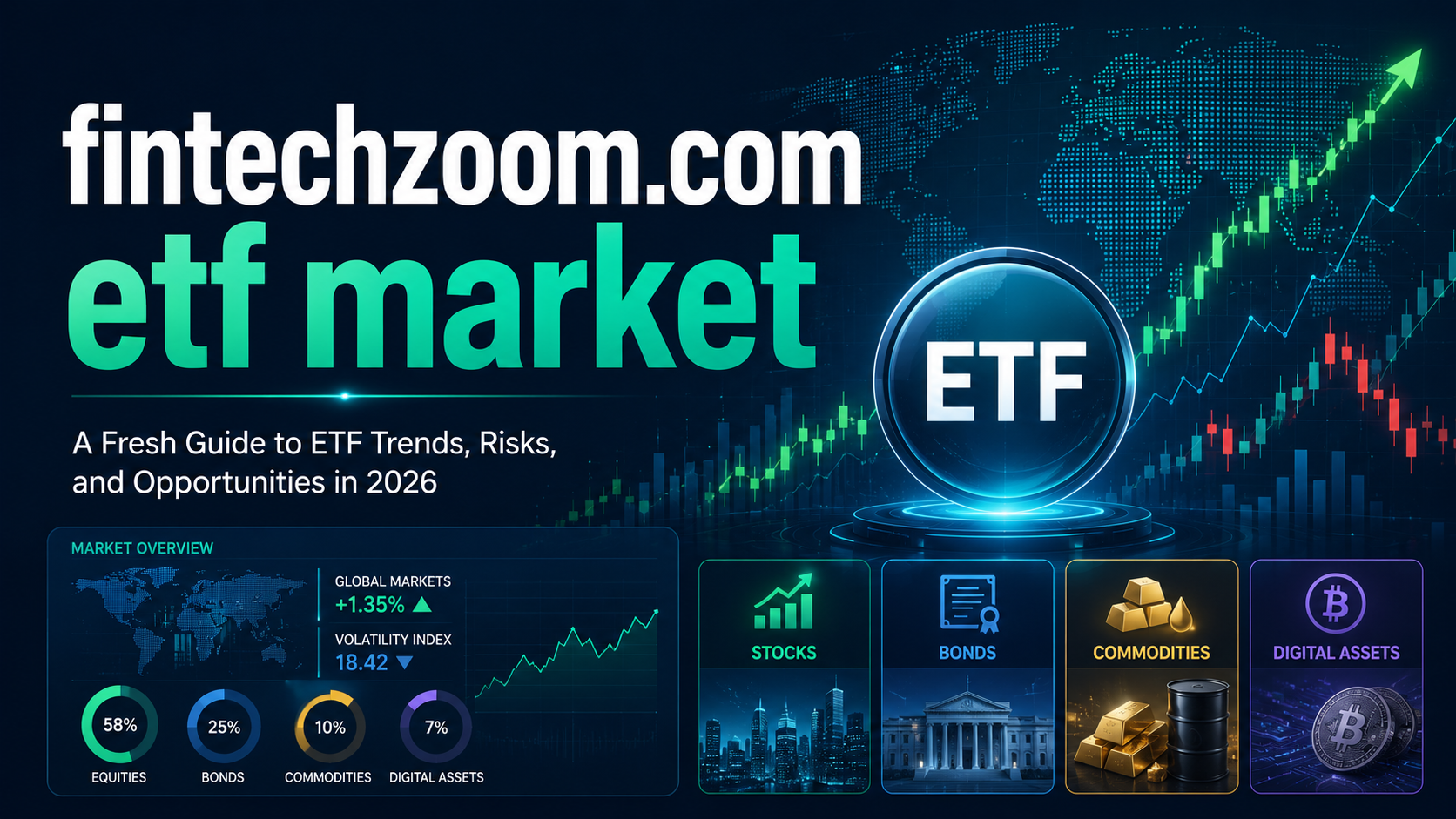
fintechzoom.com etf market: A Fresh Guide to ETF Trends, Risks, and Opportunities in 2026

Published

on

fintechzoom.com etf market

The fintechzoom.com etf market has become a useful topic for investors who want to understand exchange-traded funds, market trends, portfolio diversification, and the growing role of financial technology in investment research. ETFs are no longer just simple index-tracking products. They now cover stocks, bonds, commodities, sectors, themes, active strategies, and even crypto-related exposure. For new and experienced investors, the key challenge is not finding an ETF; it is understanding which ETF fits a specific goal, risk level, and market environment.

FintechZoom describes ETFs as investment funds that trade on stock exchanges like stocks and often track indexes such as the S&P 500. That basic definition is still correct, but the ETF industry has expanded far beyond traditional index funds. Today, investors use ETFs for long-term wealth building, short-term positioning, income generation, inflation protection, sector rotation, and global diversification.

In 2026, ETF demand remains strong. The U.S. ETF market had about $13.55 trillion in assets in March 2026, according to the Investment Company Institute. Globally, ETF assets were around $20.08 trillion at the end of Q1 2026, with record first-quarter net inflows of about $626.42 billion. These numbers show that ETFs have moved from a niche investment product into one of the main building blocks of modern portfolios.

What Makes the fintechzoom.com etf market Important?

The fintechzoom.com etf market matters because investors increasingly rely on digital finance platforms to compare funds, follow market news, and make faster decisions. FintechZoom covers financial markets, stocks, crypto, commodities, banking, and related market news, making it part of the broader ecosystem of online financial information.

For ETF investors, this type of platform can help explain market movements in a simpler way. Instead of reading only complex institutional reports, everyday investors can follow ETF-related news, understand sector trends, and learn how macroeconomic events affect fund performance.

ETFs are popular because they combine several benefits. They trade like stocks, often have lower fees than many traditional funds, disclose holdings regularly, and provide instant diversification. For example, instead of buying dozens of individual technology stocks, an investor can buy one technology ETF. Instead of choosing several bonds one by one, an investor can use a bond ETF to access a diversified basket.

However, easy access does not mean ETFs are risk-free. Every ETF has a structure, strategy, expense ratio, liquidity profile, and underlying market exposure. Understanding these details is essential before investing.

fintechzoom.com etf market and the Growth of ETF Investing

The ETF industry has grown because it solves real investor problems. Many people want diversification without having to pick individual stocks. Others want lower costs, tax efficiency, and the flexibility to buy or sell during market hours. Institutional investors also use ETFs to quickly adjust exposure to equities, bonds, sectors, currencies, commodities, and regions.

In 2025, U.S. ETF net share issuance reached a record $1.5 trillion, up from $1.1 trillion in 2024, according to ICI. That surge highlights how ETFs are taking a larger share of investment flows that once went mainly into mutual funds.

The momentum continued into 2026. In April 2026, U.S.-listed ETFs reportedly attracted about $178 billion in new investments, one of the strongest monthly totals on record. Equity ETFs led the move, while bond ETFs also attracted significant capital as investors balanced risk and income needs.

This growth is not limited to one type of investor. Retail investors, advisors, pension funds, hedge funds, and institutions all use ETFs, though often for different reasons. A retail investor may use a broad-market ETF for retirement savings, while a professional trader may use a sector ETF to express a short-term view.

Key ETF Categories Investors Should Understand

1. Equity ETFs

Equity ETFs are among the most common ETF types. They may track broad indexes such as the S&P 500, Nasdaq-100, or total market indexes. Others focus on specific sectors such as technology, healthcare, energy, financials, or real estate.

Equity ETFs are suitable for investors seeking long-term growth, but they can decline sharply during market corrections. A broad-market ETF may reduce single-company risk, but it still carries stock market risk.

2. Bond ETFs

Bond ETFs provide exposure to government bonds, corporate bonds, municipal bonds, high-yield bonds, or short-term Treasury bills. They are often used for income, stability, or diversification.

In uncertain markets, bond ETFs can help balance equity risk. However, they are still affected by interest rates, inflation expectations, credit quality, and duration. Long-duration bond ETFs may fall when interest rates rise.

3. Sector and Thematic ETFs

Sector ETFs allow investors to target specific parts of the economy. Thematic ETFs focus on trends such as artificial intelligence, clean energy, cybersecurity, robotics, or electric vehicles.

These funds can offer strong growth potential, but they are usually more concentrated than broad-market ETFs. A theme may sound attractive, but investors should review holdings, fees, valuation, and long-term demand.

4. Commodity ETFs

Commodity ETFs provide exposure to assets such as gold, silver, oil, natural gas, or broad commodity baskets. Gold ETFs often attract attention during inflation concerns, currency weakness, or market stress.

Commodity ETFs can help diversify a portfolio, but they may be volatile. Some funds hold physical commodities, while others use futures contracts, which can create tracking differences.

5. Crypto ETFs

Crypto ETFs became one of the most discussed ETF segments after spot Bitcoin ETFs gained regulatory approval in the U.S. These products allow investors to gain Bitcoin exposure through regulated brokerage accounts rather than directly managing wallets and private keys.

Crypto ETFs can improve access, but they remain high-risk. Bitcoin and other digital assets can move sharply in both directions. Recent reports show strong renewed interest in Bitcoin ETF flows during 2026, reflecting institutional demand, but investors should still treat crypto exposure carefully.

fintechzoom.com etf market Trends to Watch in 2026

The fintechzoom.com etf market discussion in 2026 should focus on several major trends shaping investor behavior.

First, active ETFs are growing quickly. Unlike traditional index ETFs, active ETFs rely on professional managers to choose securities or adjust strategy. Globally, actively managed ETF assets reached about $2.12 trillion at the end of March 2026, and Q1 net inflows hit a record $245.21 billion, according to ETFGI.

Second, investors are using ETFs for more precise portfolio control. Instead of simply buying one broad-market fund, many investors now combine core ETFs with smaller allocations to sectors, bonds, commodities, and international markets.

Third, ETF investors are paying closer attention to macroeconomic signals. Inflation, central bank policy, oil prices, geopolitical risk, and corporate earnings can all influence ETF flows. For example, demand for inflation-linked bond ETFs rose in 2026, even though these funds can still struggle when real yields rise.

Fourth, technology and artificial intelligence remain major investment themes. Technology-focused ETFs saw renewed positive flows in 2026 after previous rotations away from growth sectors. This shows that investors are still interested in innovation, but they are becoming more selective.

How Investors Can Use ETF Market Information Wisely

ETF research should begin with a clear goal. An investor should ask: Is the purpose growth, income, capital preservation, inflation protection, or speculation? Without a goal, it becomes easy to chase popular funds without understanding the risk.

Next, investors should review the ETF’s underlying holdings. The name of a fund can be misleading. Two ETFs with similar titles may hold very different companies or follow different weighting methods.

Expense ratio is another important factor. Lower fees can make a meaningful difference over time, especially for long-term investors. However, the cheapest ETF is not always the best. Liquidity, tracking accuracy, spread, fund size, and index quality also matter.

Investors should also consider overlap. Someone may own several ETFs that all hold the same large technology companies. This can create hidden concentration risk. A portfolio may look diversified on the surface but still depend heavily on a few stocks.

Finally, ETF research should include risk management. Stop chasing returns only because a fund performed well last year. Past performance does not guarantee future results. A balanced approach is usually better than reacting emotionally to short-term market noise.

Benefits of Following the fintechzoom.com etf market

Following the fintechzoom.com etf market can help investors stay aware of ETF-related news, market trends, and financial education topics. Digital platforms make ETF information more accessible, especially for beginners who may not understand institutional investment language.

The main benefit is convenience. Investors can quickly learn about fund types, sector movements, crypto ETF updates, and general financial market developments. This can support better decision-making when combined with official fund documents and reliable market data.

Another benefit is education. Many people enter the market without fully understanding diversification, fees, risk, liquidity, or asset allocation. ETF-focused content can help explain these concepts in plain language.

However, no single platform should be the only source of investment decisions. Investors should cross-check information with ETF issuer pages, official prospectuses, regulatory filings, and reputable financial data providers.

Risks Investors Should Not Ignore

ETFs are flexible, but they are not automatically safe. A broad-market ETF may be less risky than a single stock, but it can still lose value during a market downturn. A leveraged ETF can produce large losses if used incorrectly. A crypto ETF may be convenient, but it still reflects the volatility of digital assets.

Liquidity is another risk. Large, popular ETFs usually trade with tight spreads, but smaller niche funds may have wider bid-ask spreads. This can increase trading costs.

Tracking error also matters. Some ETFs do not perfectly match the performance of their benchmark. This can happen because of fees, trading costs, sampling methods, or futures-based structures.

Thematic ETFs can be especially risky because they often launch when a trend is already popular. Investors may buy at high valuations and then face losses if enthusiasm fades.

Building a Smarter ETF Portfolio

A smart ETF portfolio usually starts with a core holding. This may be a broad U.S. equity ETF, global equity ETF, or balanced combination of stock and bond ETFs. Around that core, investors can add smaller satellite positions based on goals and risk tolerance.

For example, a long-term investor may use broad equity ETFs for growth, bond ETFs for stability, and a small allocation to sector or commodity ETFs for diversification. A more conservative investor may focus on short-duration bonds, dividend ETFs, and lower-volatility equity funds.

Rebalancing is important. If one ETF grows too large in the portfolio, it can increase risk. Reviewing allocations once or twice a year can help keep the portfolio aligned with the original plan.

Investors should also avoid overtrading. Because ETFs trade like stocks, it can be tempting to buy and sell frequently. But excessive trading can increase costs and lead to emotional decisions.

Future Outlook for ETFs

The ETF industry is likely to keep expanding. More active ETFs, crypto-related products, fixed-income ETFs, and income-focused strategies are expected to attract attention. Advisors and institutions are also likely to continue shifting assets from traditional mutual funds into ETFs because of flexibility, transparency, and tax efficiency.

At the same time, investors will need to become more selective. As thousands of ETFs compete for attention, not every fund will survive or perform well. Fund closures, low liquidity, high fees, and narrow themes remain real concerns.

The best investors will not simply follow hype. They will compare funds, understand risk, check costs, and build portfolios around clear financial goals.

Conclusion

The fintechzoom.com etf market is more than a keyword or trending search phrase. It reflects a larger shift in how modern investors learn about markets, compare financial products, and use ETFs to build diversified portfolios. ETFs have become one of the most important tools in global investing, with trillions of dollars in assets and strong inflows across equity, bond, active, commodity, and crypto categories.

Still, successful ETF investing requires more than buying what is popular. Investors should understand the fund’s holdings, fees, liquidity, benchmark, risk level, and role inside a portfolio. Digital finance platforms can be useful for education and market awareness, but smart decisions should always be supported by careful research.

As 2026 continues, ETFs are likely to remain at the center of investing conversations. Whether someone is a beginner or an experienced investor, the most valuable approach is simple: stay informed, avoid hype, diversify wisely, and invest with a clear long-term plan.

FAQs

1. What is the fintechzoom.com etf market?

The fintechzoom.com etf market refers to ETF-related information, trends, and investment insights connected with FintechZoom-style financial market coverage. It includes ETF basics, market news, sector trends, crypto ETF updates, and investor education.

2. Are ETFs good for beginners?

Yes, many ETFs can be suitable for beginners because they offer diversification, transparency, and easy trading. However, beginners should start with broad, low-cost ETFs and understand the risks before investing in sector, leveraged, inverse, or crypto ETFs.

3. What is the biggest advantage of ETFs?

The biggest advantage is diversification with flexibility. One ETF can hold dozens, hundreds, or even thousands of securities, while still trading on an exchange like a stock.

4. Are active ETFs better than index ETFs?

Not always. Active ETFs may outperform if managers make strong decisions, but they can also underperform and may charge higher fees. Index ETFs are usually simpler, cheaper, and more predictable in strategy.

5. What should investors check before buying an ETF?

Investors should check the ETF’s holdings, expense ratio, assets under management, trading volume, bid-ask spread, benchmark, past tracking performance, and overall fit within their portfolio.

Continue Reading
Click to comment

Leave a Reply

Your email address will not be published. Required fields are marked *

Technology

Techsslassh.com: The Digital Shortcut for Curious Minds in a Noisy Tech World

Published

on

Techsslassh.com

Introduction

Technology doesn’t wait for anyone. One minute you’re learning about a new app, and the next, everyone’s talking about artificial intelligence, smarter gadgets, privacy updates, digital shortcuts, and tools that promise to “change everything.” Honestly, it can feel like trying to drink from a fire hose. That’s where a clear, friendly tech space becomes useful. Instead of throwing heavy jargon at readers, a good technology platform should explain things like a smart friend sitting across the table, coffee in hand, saying, “Relax, I’ll break it down.”

At its heart, Techsslassh.com can be imagined as that kind of digital corner: simple, fresh, helpful, and built for people who want to understand technology without feeling lost. Whether someone is a student, blogger, small business owner, gamer, remote worker, or just a naturally curious person, the right tech content can save time, reduce confusion, and even spark new ideas.

Why Simple Tech Content Matters Today

Let’s face it: most people don’t want a textbook every time they search for an answer. They want clarity. They want examples. They want to know what something means, why it matters, and how it affects everyday life.

Technology is no longer limited to coders, engineers, or IT experts. It sits in our pockets, runs our businesses, shapes our entertainment, protects our money, and even helps us cook dinner. Because of that, tech writing needs to feel human. It shouldn’t sound like a robot swallowed a dictionary.

The Problem With Overcomplicated Tech Advice

A lot of tech content online feels like it was written for machines, not people. You click an article hoping to learn one simple thing, and suddenly you’re buried under acronyms, buzzwords, and sentences that seem to go in circles.

That’s frustrating, isn’t it?

Good technology content should do three things well:

  • Explain difficult ideas in plain English.
  • Give practical examples people can actually use.
  • Help readers make better decisions without wasting their time.

When content does that, readers don’t just skim and leave. They trust it. They return. They share it. And, most importantly, they learn something useful.

The Modern Reader Wants Speed, But Not Shallowness

Here’s the tricky part: people want fast answers, but they don’t want empty ones. A short answer can be helpful, sure. However, if it misses context, readers may still walk away confused.

That’s why strong tech articles need balance. They should be quick enough to read but deep enough to matter. A reader might come looking for a simple explanation of cloud storage, website security, smartphones, software tools, or online privacy. Still, they may also need examples, pros and cons, steps, and warnings.

In other words, don’t just say what something is. Show why it matters.

A Helpful Tech Article Feels Like a Map

Imagine standing in a huge city without signs. Roads everywhere, lights blinking, people rushing past. That’s what the internet can feel like. A helpful article acts like a map. It doesn’t walk for you, but it points you in the right direction.

A strong tech guide usually includes:

  1. A clear explanation of the topic.
  2. Real-life examples.
  3. Simple steps or tips.
  4. Mistakes to avoid.
  5. A final takeaway that sticks.

That structure turns confusion into confidence. And really, that’s the whole point.

What Makes a Tech Platform Feel Trustworthy?

Trust is everything online. Readers are smarter than many websites think. They can feel when content is rushed, copied, stuffed with keywords, or written only to chase search rankings. On the other hand, they can also feel when an article has care behind it.

A trustworthy tech platform uses clear language, checks facts, avoids wild claims, and respects the reader’s time. It doesn’t pretend every tool is perfect. It doesn’t hype every trend like it’s the next moon landing. Instead, it says, “Here’s what works, here’s what doesn’t, and here’s what you should know before jumping in.”

Signs of Useful Technology Content

Good content often has a natural rhythm. It doesn’t lecture. It explains. It doesn’t shout. It guides. And yes, it may even sound a little casual because real people don’t talk like instruction manuals all day.

Useful tech content should be:

  • Clear: Easy to understand from the first paragraph.
  • Honest: No fake promises or exaggerated claims.
  • Practical: Focused on real problems and real solutions.
  • Current: Aware that tech changes quickly.
  • Readable: Smooth, friendly, and not painfully formal.

When all of these come together, readers feel like they’ve found a reliable place.

Technology Is Not Just About Devices Anymore

Years ago, when people heard the word “technology,” they often thought of computers, phones, or maybe televisions. Now, technology touches almost every part of life. It shapes shopping, banking, education, healthcare, travel, entertainment, marketing, and even relationships.

A small business owner may use automation tools to reply to customers faster. A student may use note-taking apps to organize classes. A parent may use safety settings to protect children online. A traveler may compare hotels, routes, and reviews in minutes.

See the pattern? Technology isn’t just “tech” anymore. It’s daily life with a power button.

Everyday Areas Where Tech Content Helps

A useful digital publication can cover many topics without becoming messy. The secret is organization. Readers should easily find what they need.

Common areas may include:

  • Mobile apps and smartphone tips
  • Website tools and online business advice
  • Cybersecurity and privacy basics
  • Artificial intelligence explained simply
  • Gaming updates and device guides
  • Software reviews and comparisons
  • Social media trends and digital culture
  • Smart home gadgets and lifestyle tech

Each topic has value when written with the reader in mind.

Making Sense of Trends Without Falling for Hype

New trends pop up constantly. One day everyone talks about blockchain. Then it’s virtual reality. Then AI tools. Then smart glasses. Then some mysterious app everyone swears is “the future.” Whew!

But not every trend deserves panic or applause. Some are useful. Some are overhyped. Some are still too early. Others quietly become part of daily life before people even notice.

That’s why tech writing should slow things down a bit. Instead of yelling, “This changes everything,” a better approach is to ask, “Who does this help, what problem does it solve, and what should users watch out for?”

Questions Readers Should Ask About Any New Tool

Before trusting a new app, platform, or gadget, readers should think carefully. A shiny interface doesn’t always mean a smart product.

Here are some useful questions:

  1. Does this tool solve a real problem?
  2. Is it easy to use?
  3. Does it protect personal data?
  4. Is the price fair?
  5. Are there better alternatives?
  6. Will it still be useful next month?
  7. What are real users saying about it?

These questions keep people from chasing every new digital rabbit hole.

The Human Side of Technology

It’s easy to forget that technology is built for people. Behind every app, website, device, or digital service, there’s a human need. Someone wants to save time. Someone wants to feel safer. Someone wants to create, learn, earn, connect, or simply have fun.

That’s why tech content should never feel cold. The best articles understand that users aren’t just looking for features. They’re looking for confidence.

A person reading about password managers may actually be worried about losing access to important accounts. Someone comparing laptops may be trying to make the best purchase with limited money. A beginner learning about website hosting may be nervous about making a costly mistake.

Good writing sees that. It doesn’t just explain the tool. It respects the person using it.

How Readers Can Get More Value From Tech Articles

Reading tech content is helpful, but using it wisely is even better. Instead of jumping from one article to another, readers should slow down and apply what they learn.

Here’s a simple method:

  • Read with a goal: Know what problem you’re trying to solve.
  • Take quick notes: Write down tools, tips, or warnings.
  • Compare sources: Don’t rely on one opinion only.
  • Test carefully: Try free versions before paying.
  • Review results: Ask yourself whether the advice worked.

That may sound basic, but it works. A little patience saves a lot of headaches later.

Don’t Believe Everything Instantly

Online content can be helpful, but not all of it is accurate. Some articles are outdated. Some are biased. Some are written only to sell something. So, readers should keep a sharp eye.

Look for updated information, balanced opinions, and clear explanations. If a website makes huge promises without details, that’s a red flag. If every product is “amazing,” that’s another one.

As the old saying goes, if it sounds too good to be true, it probably needs a second look.

Why Friendly Language Wins

There’s a reason simple writing works so well. People are busy. They don’t want to decode every sentence. They want the message to land quickly.

Friendly language doesn’t mean childish language. It means clean, direct, and natural writing. It uses examples. It uses everyday words. It respects readers instead of trying to impress them.

For example, instead of saying, “This application facilitates multi-device synchronization,” say, “This app keeps your files updated across your phone, laptop, and tablet.” Same meaning, much better experience.

That’s the sweet spot.

Building Digital Confidence One Article at a Time

Confidence grows slowly. One helpful article may teach someone how to protect an account. Another may help them pick the right software. Another may explain a confusing trend. Step by step, readers begin to feel more comfortable with technology.

That’s powerful.

A good platform doesn’t just publish information. It helps people feel less intimidated by the digital world. It turns “I have no idea what this means” into “Okay, now I get it.”

And honestly, that little shift matters more than most people think.

FAQs

What kind of topics should a technology website cover?

A technology website can cover apps, gadgets, cybersecurity, AI tools, software, gaming, website tips, online business tools, and digital trends. The best topics are useful, current, and easy for readers to apply.

Why is simple language important in tech articles?

Simple language helps more people understand difficult topics. Not every reader is a tech expert, so clear writing makes information easier to trust, remember, and use in real life.

How can readers know if tech advice is trustworthy?

Readers should check whether the article is clear, updated, balanced, and realistic. It should explain both benefits and risks instead of making wild claims or pushing products too aggressively.

Should tech content include examples?

Yes, examples make tech content much easier to understand. A real-life example can turn a confusing idea into something practical, especially for beginners.

Why do tech trends become popular so quickly?

Tech trends spread quickly because people are always looking for faster, smarter, and easier ways to do things. Social media, influencers, and businesses also help trends gain attention fast.

Is every new digital tool worth using?

No, not every tool is worth using. Some are helpful, some are overhyped, and some may not fit your needs. It’s always smart to compare options before signing up or paying.

Conclusion

The digital world is loud, fast, and sometimes a little overwhelming. Still, with the right guidance, it becomes much easier to understand. Clear tech content can help readers make smarter choices, avoid common mistakes, and feel more confident online.

A strong technology platform doesn’t need to sound complicated to be valuable. In fact, the best ones often feel simple, warm, and practical. They explain the hard stuff without making readers feel small. They bring order to chaos. They turn confusing updates into useful knowledge.

And in a world where technology keeps changing before we’ve even finished our coffee, that kind of clarity is worth its weight in gold.

Continue Reading

Technology

Fintechzoom com markets: A Street-Smart Guide to Reading the Money Weather

Published

on

Fintechzoom com markets

Introduction

Markets can feel like a crowded train station at rush hour. Everyone’s moving, screens are flashing, headlines are shouting, and somewhere in the middle of it all, you’re trying to figure out which platform to trust, which signal matters, and which bit of “breaking news” is just noise wearing a fancy hat.

That’s where tools and financial information hubs enter the picture. The phrase Fintechzoom com markets points toward a growing appetite for quick, digestible, and digitally accessible market insight. People don’t just want raw numbers anymore. They want context. They want interpretation. They want to know whether a stock wobble is a warning bell or just the market sneezing after lunch.

And honestly? Fair enough.

The modern investor isn’t always a Wall Street veteran in a tailored suit. It might be a freelancer checking crypto prices between client calls. It might be a student learning about ETFs. It might be a small business owner wondering why interest rates are making customers behave differently. Markets have become everybody’s business, whether we asked for it or not.

So, let’s unpack this world in plain English, with a bit of imagination, a touch of street wisdom, and no stiff textbook tone breathing down your neck.

Why Market Platforms Matter More Than Ever

Once upon a time, financial information lived behind expensive terminals, brokerage desks, and newspaper columns written for people who already knew the secret handshake. Today, the gates have cracked open. Market data is everywhere: apps, newsletters, dashboards, social media threads, podcasts, and finance portals.

That sounds wonderful, right?

Well, yes and no.

Access is great, but too much information can turn into a fog machine. One tab says stocks are ready to rally. Another warns of recession. A third insists gold is the only safe bet. Meanwhile, someone with a cartoon profile picture is yelling about a meme coin “going to the moon.”

Lovely chaos.

A good market platform helps organize that chaos. It doesn’t magically predict the future, because nobody has a crystal ball that works on Tuesdays and Thursdays. Instead, it gives users a clearer windshield. You still have to drive, but at least you’re not steering through mud.

The New Investor Is Curious, Restless, and Online

Today’s investor wants answers fast. Not shallow answers, necessarily, but fast ones. People are used to tracking food deliveries, flights, workouts, and bank balances in real time. Naturally, they expect the same rhythm from financial markets.

That expectation has changed how market platforms present information. Instead of dense walls of numbers, many now offer:

  • Live price updates
  • Market summaries
  • Sector snapshots
  • Crypto and stock coverage
  • Commodity tracking
  • Economic news
  • Watchlists
  • Educational explainers
  • Investor sentiment indicators

And here’s the kicker: presentation matters. A beautifully organized dashboard can make intimidating financial data feel manageable. A messy one? It can make even a simple price chart look like an alien transmission.

The Human Side of Market Watching

It’s tempting to think markets are purely mathematical. Numbers go up, numbers go down, traders react, algorithms fire, and that’s that.

But markets are deeply human. Messy, emotional, hopeful, fearful, stubbornly dramatic humans are baked into every candle chart.

A stock doesn’t fall only because “the fundamentals changed.” Sometimes it falls because investors are nervous. Sometimes it rises because people are excited. Sometimes the market shrugs off bad news like a teenager ignoring chores. Other times, it panics over a minor headline like someone spotted a shark in a swimming pool.

This emotional layer is why market platforms matter. They don’t just show prices. The better ones help readers sense the mood in the room.

Greed, Fear, and the Coffee-Stained Keyboard

Every investor meets two noisy neighbors: greed and fear.

Greed says, “Buy now, everyone’s getting rich!”

Fear says, “Sell everything, hide in cash, move to the mountains!”

Neither one is a great financial advisor. They’re loud, persuasive, and occasionally useful, but they shouldn’t be driving the bus.

Market tools can help slow things down. By comparing price movement, volume, news, earnings, and broader economic conditions, users can step back and ask better questions.

For example:

  1. Is this move tied to actual company performance?
  2. Is the whole sector moving, or just one stock?
  3. Did a policy decision affect investor expectations?
  4. Is the market reacting emotionally or rationally?
  5. Does this fit my personal risk tolerance?

That last one matters more than people admit. A “great opportunity” for one investor might be a sleepless-night machine for another.

Fintechzoom com markets and the Art of Context

A phrase like Fintechzoom com markets isn’t just about visiting a finance page. It represents the broader habit of checking financial signals before making decisions. That habit can be powerful, provided it doesn’t become an obsession.

Because yes, there’s such a thing as watching markets too closely.

Refreshing charts every thirty seconds can make normal volatility feel like personal betrayal. One red candle, and suddenly your long-term strategy looks like a houseplant you forgot to water. But markets breathe. They stretch. They stumble. They recover. Some days, they’re downright cranky.

Context keeps you from overreacting.

What Context Actually Means

Context is the difference between seeing a stock drop 4% and understanding why it dropped 4%.

Maybe earnings missed expectations. Maybe the entire industry sold off. Maybe interest rates moved. Maybe investors expected perfection and got “pretty good,” which, in market language, sometimes counts as disaster. Go figure.

Good context includes:

  • Historical performance
  • Industry comparison
  • Economic environment
  • Recent news
  • Investor expectations
  • Valuation levels
  • Risk factors
  • Time horizon

Without context, data is just confetti.

Pretty, scattered, and not terribly helpful.

Reading the Market Like Weather, Not Destiny

Here’s a useful way to think about markets: they’re financial weather.

A weather forecast doesn’t control the sky. It helps you decide whether to carry an umbrella. Market information works the same way. It doesn’t guarantee profit. It helps you prepare.

If inflation data looks sticky, interest-rate expectations may shift. If oil prices spike, transportation and manufacturing costs may feel pressure. If tech earnings shine, investor appetite for growth stocks might return. Nothing is guaranteed, but patterns begin to form.

Sunny Days, Storm Clouds, and Weird Wind

Markets rarely speak in one clear voice. You’ll often see mixed signals.

A company might report strong revenue but weak guidance. The economy might add jobs while consumer confidence falls. A central bank might sound cautious even while inflation cools. That’s the weird wind.

To deal with mixed signals, investors need a layered approach. Don’t rely on one headline. Don’t worship one metric. Don’t assume one influencer has cracked the code. Finance rewards curiosity, patience, and humility far more often than blind confidence.

The Main Market Categories People Track

Different markets tell different stories. Watching only one is like reading only chapter seven of a mystery novel and pretending you know who did it.

1. Stock Markets

Stocks show how investors value companies. They respond to earnings, leadership, innovation, debt, competition, regulation, and general mood. A stock price is partly math and partly crowd psychology in a business suit.

Key things to watch include:

  • Revenue growth
  • Profit margins
  • Earnings expectations
  • Debt levels
  • Competitive advantage
  • Management credibility
  • Sector trends

2. Crypto Markets

Crypto markets are younger, faster, and often wilder. They can move dramatically on regulation news, liquidity changes, adoption trends, security concerns, and online sentiment.

Crypto isn’t just “digital money.” It’s a landscape of networks, tokens, protocols, speculation, and ideology. Exciting? Absolutely. Risky? Also absolutely.

3. Commodities

Oil, gold, silver, wheat, natural gas, and other commodities connect finance to the physical world. Weather, war, supply chains, mining output, crop conditions, and geopolitical tension can all influence prices.

Commodities often remind investors that markets aren’t just screens. Somewhere, a ship is delayed, a field is dry, a refinery is down, or a government just changed export rules.

4. Forex Markets

Foreign exchange markets track currencies. They reflect interest rates, trade flows, political stability, inflation, and global confidence.

Currency moves can affect travelers, importers, exporters, multinational companies, and investors holding foreign assets. Sneaky little things, exchange rates. They show up everywhere.

5. Bond Markets

Bonds may seem boring at first glance, but don’t be fooled. Bond markets often whisper before stock markets shout.

Yields can signal changing expectations about inflation, interest rates, growth, and risk. When bond yields move sharply, other markets usually pay attention.

How to Use Market Information Without Losing Your Mind

There’s a fine line between informed and overwhelmed. Cross it, and suddenly you’re reading twelve tabs about copper futures at midnight for no good reason.

A healthier approach looks like this:

  1. Choose a few reliable information sources.
  2. Build a watchlist that matches your goals.
  3. Check markets at set times instead of constantly.
  4. Separate short-term noise from long-term signals.
  5. Keep notes on why you make financial decisions.
  6. Review those notes before changing course.

That last habit is underrated. A decision journal can save you from rewriting history in your own head. Because let’s be real, we all like to pretend we “knew it all along” after the outcome becomes obvious.

Common Mistakes Market Watchers Make

Even smart people trip over the same financial banana peels.

Chasing Hype

When everyone’s talking about the same asset, it’s tempting to jump in. Nobody wants to be the person standing outside the party while the music’s blasting.

But hype can be expensive. By the time a trend becomes dinner-table conversation, early movers may already be looking for the exit.

Confusing News With Strategy

News is information. Strategy is a plan.

A headline might affect your view, but it shouldn’t automatically rewrite your entire financial life. If your plan changes every time a market commentator raises an eyebrow, it may not be a plan at all.

Ignoring Risk

Returns get the spotlight. Risk pays the bill.

Before buying anything, ask what could go wrong. Not because you’re pessimistic, but because you’re awake. Every investment has a downside, even the shiny ones wearing expensive shoes.

Overconfidence After a Win

A successful trade can make anyone feel like a genius. That’s dangerous. Sometimes you were skilled. Sometimes you were lucky. Often, it was a cocktail of both.

The market has a funny way of humbling people who start believing their own theme music.

The Role of Design in Financial Understanding

This may sound small, but design matters enormously.

A confusing chart can lead to poor decisions. A clean layout can make relationships easier to see. Color, spacing, labels, filters, and summaries all shape how users interpret information.

Imagine walking into a kitchen where every ingredient is unlabeled and dumped on the floor. Technically, the food is there. Practically, good luck making soup.

Financial platforms face the same challenge. They need to turn raw data into something usable without oversimplifying it into nonsense.

Good Design Should Help Users Ask Better Questions

The best financial interfaces don’t just answer “What happened?” They help users ask:

  • Why did it happen?
  • Is it important?
  • How does it compare?
  • What changed recently?
  • What should I watch next?

That’s the sweet spot. Not prediction. Not panic. Better questions.

Building a Personal Market Routine

You don’t need to become a full-time trader to follow markets intelligently. In fact, most people benefit from a simple routine.

Daily Check

Look at major indexes, key headlines, and any assets you already own or follow. Keep it brief. No need to turn breakfast into a board meeting.

Weekly Review

Review broader trends. Check sector performance, interest-rate expectations, earnings calendars, and economic updates. This is where patterns become clearer.

Monthly Reflection

Ask whether your financial goals, risk tolerance, or cash needs have changed. Markets matter, but your personal situation matters more.

A market can be booming while your emergency fund is too thin. A stock can look attractive while your debt costs are eating your lunch. Personal finance and investing are neighbors, not strangers.

FAQs

What makes market platforms useful?

They gather financial data, news, charts, and analysis in one place, making it easier to understand what’s happening across stocks, crypto, commodities, currencies, and other assets.

Should beginners follow markets every day?

Beginners can check markets regularly, but daily obsession isn’t necessary. A calm weekly review is often more useful than constant chart-watching.

Are market headlines always reliable?

Not always. Headlines are designed to grab attention. It’s better to read beyond the headline and compare information across multiple signals before making decisions.

Can market data predict the future?

No. Market data can highlight trends, risks, and probabilities, but it can’t guarantee future outcomes. Anyone promising certainty is probably selling something.

What’s the biggest mistake new investors make?

Many new investors chase excitement without understanding risk. A slower, research-based approach may feel less thrilling, but it usually leads to better decisions.

Is Fintechzoom com markets enough for investment decisions?

The phrase Fintechzoom com markets can represent a helpful starting point for exploring financial updates, but no single source should be your entire decision-making system. Use multiple inputs, think critically, and match choices to your own goals.

Conclusion

Markets are noisy, fascinating, irritating, brilliant, and occasionally dramatic enough to deserve their own soap opera. They can reward patience and punish arrogance. They can create opportunity and confusion in the same afternoon. And through it all, financial platforms help ordinary people make sense of the moving pieces.

The real trick isn’t finding one magical dashboard or one perfect headline. It’s learning how to read signals without becoming a prisoner of them. Watch the trends. Respect the risks. Keep your goals close. Don’t let every market twitch boss you around.

At the end of the day, smart market watching is less about predicting tomorrow and more about preparing for it. Carry the umbrella when the clouds gather, enjoy the sunshine when it comes, and remember: the market may be loud, but your decisions don’t have to be.

Continue Reading

Lifestyle Tech

El regreso d e king kylie como estrategia de marketing: The Comeback That Sold a Feeling

Published

on

El regreso d e king kylie como estrategia de marketing

Introduction

Some comebacks feel accidental. Others? They’re wrapped in lip gloss, filtered through memory, and dropped online at exactly the right moment. That’s where El regreso d e king kylie como estrategia de marketing gets interesting—not just as a pop-culture phrase, but as a case study in how a personal era can be turned into a business move.

The “King Kylie” persona wasn’t merely a hairstyle, a Snapchat streak, or a rebellious teenage mood board. It was a digital identity. It had attitude. It had eyeliner. It had that “don’t text me, I’m busy becoming iconic” energy. And years later, bringing it back wasn’t just about giving fans a throwback. It was about selling a feeling they already trusted.

Because let’s be honest: nostalgia is powerful. It sneaks up on people. One minute they’re scrolling casually, and the next they’re remembering the exact shade of matte lipstick they wanted in 2016. Brands spend millions trying to build emotional attachment. King Kylie already had it sitting there, ready to be revived.

Why King Kylie Still Matters

King Kylie worked because it felt personal. It wasn’t polished in the traditional celebrity way. It was messy, bold, dramatic, and strangely accessible. Fans didn’t just watch Kylie Jenner; they watched an era unfold in real time.

Back then, social media felt less corporate. Snapchat stories looked spontaneous. Instagram captions were shorter. Trends moved fast, but not as fast as they do now. King Kylie became a symbol of that moment: edgy, young, experimental, and unapologetically online.

That’s why the comeback carries weight. It taps into a shared memory. People aren’t only reacting to Kylie; they’re reacting to who they were when that version of Kylie dominated their feeds.

And that’s marketing gold.

Nostalgia Isn’t Lazy—It’s Strategic

Some people roll their eyes at nostalgia marketing. They say it’s easy. Just bring back an old logo, reuse an old color palette, slap “limited edition” on the packaging, and boom—instant sales.

Well, not exactly.

Good nostalgia marketing doesn’t just repeat the past. It reinterprets it. It says, “Remember this?” and then adds, “Here’s why it matters now.”

That’s the sweet spot. The return of King Kylie doesn’t work simply because fans remember the old vibe. It works because the old vibe contrasts with today’s hyper-curated celebrity culture. In a world of perfect brand decks and careful public statements, the King Kylie era feels raw—even if it was always part performance.

Funny how that works, right?

The past doesn’t have to be perfect to feel authentic. Sometimes, it only has to feel less filtered than the present.

The Psychology Behind the Comeback

A comeback like this pulls several emotional levers at once:

  • Familiarity: People trust what they recognize.
  • Identity: Fans connect the era with their own memories.
  • Scarcity: A revived persona feels temporary, making people act quickly.
  • Community: Everyone wants to say, “I was there.”
  • Curiosity: Younger audiences want to understand the hype.

That mix is hard to beat. It turns a campaign into a conversation. Instead of asking audiences to care about something new, the brand reopens a door they already walked through years ago.

And once that door is open, products, posts, collaborations, and launches don’t feel random. They feel connected to a story.

El regreso d e king kylie como estrategia de marketing: A Masterclass in Personal Branding

At its core, El regreso d e king kylie como estrategia de marketing shows how celebrity branding has shifted. It’s no longer enough to have a product. You need a world. You need lore. You need inside jokes, visual codes, old references, and emotional breadcrumbs.

King Kylie has all of that.

The blue hair. The bold lips. The moody selfies. The sense that something slightly chaotic could happen at any time. Those details create a recognizable brand language. Fans don’t need a billboard to understand it. One image, one caption, one soundbite, and they get the message.

That’s the real trick: the audience does part of the marketing for you.

They repost. They compare. They make TikToks. They argue in comment sections. They dig up old photos. They explain the era to people who missed it. Before you know it, the comeback is no longer a campaign. It’s a social event.

Turning an Era Into a Product Funnel

A strong comeback doesn’t stop at aesthetics. It has to lead somewhere. Otherwise, it’s just a cute throwback.

For a beauty brand, the pathway is obvious but still clever:

  1. Reintroduce the persona.
  2. Trigger fan nostalgia.
  3. Build speculation.
  4. Connect the vibe to products.
  5. Release limited or themed items.
  6. Let fans frame the purchase as participation.

That final point matters. People don’t just buy makeup in this kind of campaign. They buy entry into a moment. They buy a piece of the story.

A lipstick shade becomes a souvenir. A campaign image becomes a reference. A launch becomes a mini cultural reset—well, at least for the people invested in the world around it.

The Role of Social Media Timing

Timing can make or break a comeback. Bring something back too early, and people shrug. Bring it back too late, and it feels dusty. But bring it back when audiences are craving comfort, personality, and recognizable cultural moments? Now you’re cooking.

Social platforms are especially friendly to nostalgia because old content can be recycled, remixed, and rediscovered. A single throwback post can spark thousands of “remember when?” comments. Then come the edits. Then the comparisons. Then the think pieces. Then the product speculation.

It snowballs fast.

And honestly, that’s the beauty of a comeback campaign. The brand doesn’t have to explain everything. The audience fills in the blanks, sometimes better than a marketing team ever could.

Why Fans Respond So Strongly

Fans love continuity. They like feeling as though they’ve grown alongside someone. When a celebrity revives an old persona, it creates a bridge between past and present.

It says, “You remember this version of me, and I do too.”

That tiny emotional acknowledgment can feel surprisingly powerful. It rewards long-term fans for paying attention. It gives them a sense of ownership. They were there before the rebrand, before the expansion, before the billion-dollar headlines, before everything got so glossy.

For newer followers, meanwhile, the comeback works like a cultural invitation. They may not have lived through the original King Kylie era, but they can still participate in the revival. And in online culture, participation is everything.

The Aesthetic Advantage

Every memorable marketing campaign has a visual fingerprint. King Kylie’s fingerprint is sharp, moody, and instantly recognizable. It doesn’t whisper. It pouts in the mirror with flash on.

That visual clarity matters because audiences process images quickly. A campaign needs to be understood in seconds. King Kylie’s look does that effortlessly.

The aesthetic includes:

  • Darker, bolder makeup
  • High-contrast selfies
  • Streetwear-inspired styling
  • Dramatic hair colors
  • Confident, slightly rebellious poses
  • A tone that says, “Yeah, I know you’re watching”

It’s not subtle, but it doesn’t need to be. In fact, subtlety would weaken it. The whole point is attitude.

When Personal History Becomes Brand Capital

Most brands would kill for a built-in archive like this. Kylie’s personal history doubles as brand material. Her old looks, posts, and public phases can be reactivated whenever they align with current business goals.

That might sound calculated—and, sure, it is. But all branding is calculated to some degree. The difference here is that the material already carries emotional meaning for the audience.

That’s why personal branding is such a force. A company can invent a mascot, a campaign, or a storyline. A celebrity can use their own life as the narrative engine.

Of course, that comes with risks. Audiences are quick to spot fakery. If a comeback feels too manufactured, people call it out immediately. The King Kylie revival works best when it balances polish with playfulness. Too clean, and it loses the old spark. Too chaotic, and it may not serve the business.

Walking that line? That’s the job.

The Risk of Overusing Nostalgia

Here’s the catch: nostalgia has an expiration date if you squeeze it too hard.

Fans love a comeback, but they don’t want to feel manipulated. If every launch becomes “the return of an era,” the magic fades. People start to see the strings. What once felt exciting starts looking like a brand rummaging through its closet.

So the smarter move is restraint. Let the comeback breathe. Use references carefully. Make the revival feel like a chapter, not a desperate loop.

A successful nostalgia strategy should answer one question clearly: Why now?

Without that answer, it’s just decoration.

Lessons Other Brands Can Learn

The King Kylie comeback offers useful lessons for creators, influencers, beauty companies, fashion labels, and even small businesses.

Here’s what stands out:

  1. Build recognizable codes.
    Colors, phrases, poses, packaging, and tone all matter. People should know your brand before they see the logo.
  2. Don’t abandon your archive.
    Old content can become future strategy. What feels outdated today may become valuable tomorrow.
  3. Make fans feel included.
    A comeback works better when the audience feels like they’re part of the story.
  4. Use nostalgia with a fresh angle.
    Repetition gets boring. Reinvention keeps people interested.
  5. Sell emotion, not just products.
    People remember how a brand makes them feel. That feeling often drives the purchase.

Why This Strategy Feels So Modern

Ironically, looking backward can be very modern. Today’s audiences are overwhelmed by newness. New trends. New products. New faces. New drama. New everything, all the time.

A familiar persona cuts through the noise.

It doesn’t need a long explanation. It arrives with context already attached. That gives it an advantage in crowded digital spaces where attention is short and competition is brutal.

Plus, modern audiences love layered content. They want references. They want Easter eggs. They want to feel clever for recognizing the deeper meaning behind a post. King Kylie gives them that.

It turns marketing into a wink.

FAQs

What does King Kylie represent?

King Kylie represents a bold, highly recognizable era of Kylie Jenner’s online identity. It was known for dramatic beauty looks, edgy styling, and a confident social media presence that helped shape her personal brand.

Why is the comeback useful for marketing?

The comeback is useful because it activates nostalgia, strengthens brand identity, and encourages audience participation. Instead of introducing something completely unfamiliar, it revives an emotional connection that already exists.

Is nostalgia marketing always effective?

No, not always. Nostalgia works best when it feels timely, relevant, and refreshed. If it’s overused or poorly connected to the present, it can feel forced.

How can small brands use a similar strategy?

Small brands can revisit past customer favorites, old designs, memorable campaigns, or early brand stories. The key is to bring them back with a new twist rather than simply copying the past.

Does a celebrity comeback need products attached to it?

Not always, but products can give the comeback a clear business purpose. Without a product, event, or creative release, the buzz may fade quickly.

Conclusion

The return of King Kylie isn’t just a beauty-world throwback. It’s a reminder that identity can be one of the strongest marketing tools a brand owns. When audiences attach emotion to a specific era, that era becomes more than content. It becomes currency.

Handled well, El regreso d e king kylie como estrategia de marketing shows how nostalgia, timing, visual identity, and fan participation can come together in a campaign that feels both familiar and fresh. It’s not about pretending the past never ended. It’s about knowing which parts of the past still have a pulse.

Continue Reading

Trending

Copyright © 2026 Zox News Theme. Theme by MVP Themes, powered by WordPress.