
Business
Jones mygreenbucks net: The Little Green Door in the Internet’s Money Maze


Introduction
The internet has a funny way of tossing strange phrases into our lives like pebbles through a window. One minute, you’re checking your email, minding your own business, and the next, you’ve stumbled upon a phrase that sounds half like a financial tool, half like a secret club, and half like something your cousin would swear is “the next big thing.” Yes, that’s three halves. Online life rarely does neat math.
Money-related names always have a certain sparkle, don’t they? Jones mygreenbucks net Add words like “green,” “bucks,” “net,” or a plain human name like Jones, and suddenly people lean forward. Maybe it’s a platform. Maybe it’s a blog. Maybe it’s a trend. Maybe it’s just another breadcrumb in the gigantic, messy bakery of the web.
But here’s the thing: the phrase matters less than what it represents. It represents curiosity. It represents the way people chase financial clarity online. It represents that tiny voice in the back of the mind whispering, “Could this help me earn, save, grow, or finally stop wondering where my money went?”
So, let’s open that little green door and wander in carefully.
The Curious Pull of Money-Sounding Names
Names are powerful. A name can make something feel reliable before it proves itself. A name can make an ordinary website sound like a vault full of possibilities. A name can make people click, pause, wonder, and search again.
Think about it. If someone sees a phrase that hints at cash, growth, personal finance, or online earning, the brain lights up a bit. We’re wired to notice opportunities. Rent is real. Groceries are real. Bills, unfortunately, don’t take vacations. So when a phrase suggests money might be involved, people naturally get interested.
That doesn’t mean they’re gullible. Not at all. It means they’re human.
People search money-related terms because they’re looking for things like:
- A side-income idea that doesn’t sound soul-crushing.
- A budgeting tool that doesn’t make them feel judged.
- A simple explanation of confusing financial topics.
- A sign that they’re not the only person trying to figure life out.
- A shortcut, even though shortcuts often come with potholes.
And honestly, who hasn’t wanted a shortcut now and then?
Why Online Finance Curiosity Feels So Personal
Money isn’t just numbers. It’s emotion wearing a calculator costume.
A person searching for a money-related phrase might not be looking for “wealth” in the dramatic yacht-and-gold-watch sense. They might just want to breathe easier. They might want to stop dodging bank notifications. They might want to buy better groceries, help their family, save for school, pay off a phone, or finally build an emergency fund that doesn’t collapse every time a tire goes flat.
That’s why financial content hits differently. It isn’t just informational. It’s personal.
Behind every search is usually a quiet little story:
“Can I do better?”
“Am I missing something?”
“Is there a smarter way?”
“Could this be useful?”
“Is this safe?”
Those questions matter. They deserve better than hype.
Jones mygreenbucks net and the Search for Digital Trust
Here’s where things get interesting. In the online money world, trust is everything. A shiny name means nothing if the experience behind it feels foggy. People don’t just need possibilities; they need clarity. Without clarity, even a promising idea starts to feel like a hallway with flickering lights.
When someone lands on a money-themed term or site, they should ask a few plain, practical questions. Not paranoid questions. Smart questions.
The “Wait a Minute” Checklist
Before trusting any online finance-related platform, article, offer, or tool, pause and check:
- Who is behind it?
Is there a real person, company, address, or team? - What exactly does it do?
If the answer sounds like a fog machine wrote it, be careful. - Does it ask for sensitive information too quickly?
A site that wants your personal data before explaining itself is waving a red flag. - Are the claims realistic?
“Make money while sleeping forever with no effort” sounds lovely, but so does a dragon that files your taxes. - Can you find independent information?
One glowing article isn’t enough. Look for multiple perspectives. - Are the terms clear?
If rules, privacy details, fees, or withdrawal conditions are hidden, that’s not a tiny issue. That’s the issue.
Trust is built in daylight. If something only looks good in the dark, well, that tells you plenty.
The Internet’s Love Affair With “Easy Money”
Let’s be honest: the phrase “easy money” has probably caused more bad decisions than burnt toast and late-night shopping combined. It’s tempting because everybody wants relief. Nobody wakes up excited to wrestle with spreadsheets unless they’re built differently.
But most genuine money improvement comes from boring, repeatable actions. Annoying? Yes. True? Also yes.
Saving a little. Tracking spending. Learning skills. Avoiding scams. Comparing options. Reading the fine print. Saying no to nonsense. Slowly building something that doesn’t vanish by Tuesday.
That’s not glamorous, but it works.
The Problem With Fast Promises
Fast promises online usually come dressed nicely. They use friendly words. They talk about freedom, flexibility, rewards, passive income, smart systems, secret strategies, and limited-time chances. They make ordinary caution feel like fear.
But caution isn’t fear. Caution is wisdom wearing comfortable shoes.
A healthy financial opportunity should survive basic questions. If asking questions makes the whole thing fall apart, there wasn’t much there in the first place.
A More Human Way to Think About Online Money Tools
Not every online money resource is suspicious. Plenty of tools, blogs, apps, communities, and calculators are useful. The trick is knowing what role they should play.
A tool can guide you.
A blog can teach you.
A calculator can show you patterns.
A platform can organize information.
A community can motivate you.
But none of them should replace your judgment.
Green Flags Worth Noticing
While red flags get all the attention, green flags matter too. A trustworthy finance-related resource often has:
- Clear explanations written in normal language.
- Transparent ownership or authorship.
- Practical advice instead of magical claims.
- Privacy policies that are easy to find.
- No pressure to act immediately.
- Realistic expectations.
- A design that doesn’t feel like a carnival barker yelling at your wallet.
If something calmly explains itself, respects your pace, and doesn’t promise the moon in exchange for your email, that’s already a better sign.
The Psychology Behind Clicking Financial Keywords
Search behavior isn’t random. People click because something in the phrase connects with a need. Money keywords often trigger a mix of hope and urgency. That mix is powerful. It can help people learn, but it can also make them rush.
You see a phrase. You imagine a possibility. You click. Then maybe you click again. Before long, you’re six tabs deep, reading about rewards, tools, strategies, reviews, and opinions from people who may or may not know what they’re talking about.
Been there, done that, probably still have the tabs open.
Why Curiosity Needs a Seatbelt
Curiosity is good. It helps people discover new ideas. But online, curiosity needs a seatbelt because not every road is paved.
Before following any money-related suggestion, slow down and ask:
- What problem am I trying to solve?
- Does this actually solve it?
- What does it cost me?
- What information am I giving away?
- What happens if I stop using it?
- Does this sound too neat, too easy, or too urgent?
A little pause can save a big headache.
The Everyday Money Lessons Hidden in the Noise
Odd online phrases can still lead us to useful lessons. Even when the phrase itself feels mysterious, the questions it raises are valuable. Why are people searching for money help? Why do financial tools attract attention? Why do vague promises spread so quickly? Why do simple budgeting habits feel harder than they should?
Because money is tangled up with identity, stress, pride, fear, comfort, and dreams.
Small Habits That Actually Help
Instead of chasing every shiny new term, try building a few grounded habits. They’re not flashy, but they’re sturdy.
- Name your money leaks.
Subscriptions, delivery fees, impulse buys, random upgrades—little leaks sink small boats. - Create a weekly money check-in.
Ten minutes. Same day. No drama. Just look. - Use separate buckets.
Bills, savings, spending, emergency funds. Money behaves better when it has a job. - Wait before buying.
A 24-hour pause can reveal whether you wanted the item or just wanted the feeling. - Learn one financial concept per week.
Interest, credit scores, inflation, budgeting, investing, taxes. Tiny learning compounds. - Don’t trust pressure.
Any “now or never” money offer deserves suspicion.
Funny enough, these simple habits can outperform many dramatic online systems.
When a Financial Phrase Becomes a Story
There’s something almost fictional about the way certain terms travel around the web. A phrase appears, gains attention, gets turned into articles, discussions, interpretations, and rumors, and suddenly it has a life of its own.
It becomes a story.
And every person who searches it brings their own hopes to that story. One person wants extra income. Another wants a review. Another wants to know whether it’s legitimate. Someone else is just curious because they saw the name somewhere and thought, “Huh, what’s that?”
That’s the internet in a nutshell: millions of tiny mysteries, all begging to be clicked.
But Stories Need Discernment
A good story pulls you in. A good decision makes you step back.
That’s the balance. Let curiosity open the door, but let discernment decide whether you walk through it.
How to Read Online Finance Content Without Getting Played
There’s a skill to reading finance content online. It’s not just reading words; it’s reading tone, structure, motive, and missing pieces.
Watch the Language
Be careful when content leans too hard on phrases like:
- Guaranteed income.
- Risk-free profit.
- Secret method.
- Instant approval.
- Limited spots.
- No effort required.
- Everyone is earning.
Real finance has trade-offs. If a page refuses to mention trade-offs, it’s probably selling a fantasy.
Watch the Missing Details
Sometimes the biggest warning isn’t what a page says. It’s what it avoids saying.
Missing details may include:
- Who owns the platform.
- How money is generated.
- What fees exist.
- Whether users can delete data.
- How support works.
- What happens during disputes.
- Whether claims are backed by evidence.
A silence can be louder than a slogan.
Practical Ways to Protect Yourself Online
You don’t need to become a cybersecurity wizard with twelve monitors and a suspicious cat. Basic habits go a long way.
Safety Habits That Are Worth the Trouble
- Use a separate email for sign-ups.
- Don’t reuse passwords.
- Turn on two-factor authentication where possible.
- Avoid sharing banking details unless the platform is clearly reputable.
- Search for independent reviews.
- Read privacy policies, at least the important parts.
- Take screenshots of terms before signing up.
- Never pay upfront for a vague earning opportunity.
- Trust discomfort. If something feels off, step away.
Your gut isn’t always perfect, but it’s not useless either.
A Better Definition of “Green Bucks”
The phrase “green bucks” naturally makes people think of cash. But maybe the better meaning is broader than money. Maybe “green bucks” can stand for money that grows cleanly, honestly, and patiently.
Not cash grabbed in a panic.
Not rewards chased blindly.
Not income built on confusion.
But money connected to better habits, clearer thinking, and fewer late-night regrets.
That may sound a little poetic, but hey, personal finance could use more poetry and fewer panic attacks.
What Healthy Financial Growth Looks Like
Healthy growth is usually:
- Slow enough to understand.
- Clear enough to explain.
- Flexible enough to survive mistakes.
- Honest enough to include risks.
- Practical enough to use in real life.
If an online idea helps you do that, it may be worth exploring. If it only makes you feel rushed, dazzled, or confused, maybe leave it where you found it.
FAQs
What is the main idea behind this article?
The main idea is to explore how money-related online phrases attract attention and how readers can approach them with curiosity, caution, and practical thinking.
Should people trust every online money platform they find?
No. People should check ownership, privacy details, claims, reviews, terms, and risks before trusting any online money-related platform.
Why do financial keywords become popular so quickly?
They become popular because people are naturally interested in earning, saving, budgeting, and improving their financial lives. A phrase that hints at money can spark curiosity fast.
Can online tools really help with personal finance?
Yes, some can help with budgeting, tracking, learning, and planning. However, they should support your judgment, not replace it.
What is the biggest warning sign in online money content?
The biggest warning sign is unrealistic certainty. If something promises guaranteed money with no effort, no risk, and no clear explanation, it deserves serious caution.
How can someone stay safe while exploring financial websites?
Use strong passwords, avoid sharing sensitive data too quickly, check independent information, read terms, and never rush into offers that rely on pressure or hype.
Conclusion
The phrase Jones mygreenbucks net may sound like a curious signpost on the digital roadside, but the bigger lesson goes far beyond one name. Online money curiosity is everywhere because people want options. They want breathing room. They want tools, ideas, and maybe a bit of hope tucked between bills and busy days.
Still, hope works best when it travels with common sense.
So, click if you’re curious. Read if you’re interested. Explore if something seems useful. But don’t hand over trust just because a name sounds promising. Ask questions. Look for clarity. Notice red flags. Appreciate green flags. And above all, remember that real financial progress usually isn’t hidden behind a mysterious doorway. More often, it’s built slowly, with small choices, honest information, and the courage to say, “Wait a minute, let me check this first.”
Devon has never treated markets as simple shopping stops They are meeting points for food, craft, tourism, and small business This guide explains the Devon market scene with practical detail for visitors, traders, and local buyers.
Quick Bio
| Feature | Details |
|---|---|
| Core Definition | A Devon market is a local trading space where farmers, makers, bakers, fishmongers, antique sellers, and independent retailers sell directly to shoppers. |
| Origin | Market culture in Devon grew from medieval charters, agricultural trade, coastal supply routes, and town-centre exchange. |
| Primary Use | Buying fresh food, handmade goods, seasonal produce, gifts, antiques, street food, and everyday items. |
| Industry Link | Agriculture, hospitality, tourism, food production, retail, crafts, events, and rural enterprise. |
| Common Materials | Canvas stalls, wooden tables, wicker baskets, chalkboards, recyclable packaging, display crates, handmade signage, and reusable market bags. |
| Popular Applications | Weekend shopping, food tourism, local sourcing, small brand testing, community events, and town-centre regeneration. |
What Is Devon Market?
A Devon market is not one single place. It is a wider network of town markets, farmers markets, pannier halls, food events, craft fairs, and seasonal pop-ups across Devon. Each location carries a different mood, but the same idea runs through them: local people selling useful, tasty, or handmade things with a face-to-face connection.
For shoppers, the Devon market experience is slower and more personal than supermarket buying. You can ask where the cheese was made, which apples are best for crumble, or whether a ceramic bowl is dishwasher safe. That conversation is part of the value.
For producers, a Devon market creates a direct route to buyers without needing a large shop, agency, or national distributor. It helps small traders test products, build trust, and understand what local customers actually want.
Historical Roots of Market Trading in Devon
Devon’s trading culture is tied to farming, fishing, wool, mining, coaching routes, and coastal movement. Market towns developed because rural communities needed reliable places to exchange food, livestock, tools, fabrics, and household goods. Many of those towns still carry that function, even when the stalls now sell sourdough, candles, jewellery, or vintage clothing.
Pannier markets are a strong part of this story. The word “pannier” refers to the baskets once used to carry goods, often by pack animals. In Devon, these indoor halls became practical places for wet-weather trade, making them especially useful in a county where market life continues through changing seasons.
A Devon market may look charming to visitors, but it also has a working economic history. It helped connect villages to towns, farmers to households, and craftspeople to customers long before online selling became normal.
Main Types of Devon Market Experiences
The Devon market scene is broad, so visitors should not expect every market to feel the same. Some are food-led and focused on seasonal produce. Others are packed with antiques, pre-loved goods, craft stalls, flowers, plants, and household items.
The best approach is to match the market to your goal. Go early for fresh bread and vegetables. Arrive later for browsing, lunch, and relaxed gift shopping. Check market days before travelling because many Devon markets run weekly, monthly, or on selected seasonal dates.
Farmers Markets and Fresh Local Produce
Farmers markets are ideal for people who want fruit, vegetables, eggs, meat, fish, preserves, honey, cider, cakes, pies, bread, and other regional food. A farmers market focused on growers often gives shoppers a clearer sense of seasonality than a standard grocery aisle.
This is where Devon’s land and coast meet the shopping basket. You may find dairy products from inland farms, seafood from the coast, orchard drinks, locally milled flour, and vegetables grown within a short distance of the stall. That local link is a major reason visitors remember these markets.
Pannier Markets and Indoor Market Halls
A pannier hall gives the county’s market tradition a more permanent base. These markets are especially helpful for all-weather shopping because traders are not fully exposed to rain or wind. They also support repeat footfall, which helps nearby cafés, independent shops, and town-centre businesses.
Tavistock, South Molton, Tiverton, Barnstaple, Bideford, and other Devon towns are closely associated with pannier-style shopping. Some halls mix food with crafts, antiques, clothing, tools, books, collectables, and practical everyday stalls. That blend makes them useful for residents, not just tourists.
Artisan, Craft, Antique, and Vintage Stalls
Craft and antique sellers add character to the local market offer. Their stalls often include pottery, prints, woodwork, textiles, candles, soaps, jewellery, books, vinyl, furniture, kitchenware, and decorative pieces. The stock changes often, which gives regular shoppers a reason to return.
This side of the Devon market scene is also strong for gift buying. Instead of choosing a mass-produced item, shoppers can pick something with a maker, story, town, or material behind it. That emotional detail matters for birthdays, holiday souvenirs, and home décor.
Key Devon Market Towns Worth Visiting
Devon has many market towns, and each one has its own rhythm. Exeter offers a city-centre food market feel, while Tavistock leans into heritage and indoor shopping. South Molton works well for North Devon visitors, and Totnes brings a creative, independent, slightly alternative style.
A good market trip can be built around one town or turned into a weekend route. North Devon buyers may prefer South Molton, Barnstaple, Bideford, and Great Torrington. South Devon visitors often look at Totnes, Newton Abbot, Dartmouth, Kingsbridge, and Teignmouth.
Exeter, Tavistock, Totnes, and South Molton
Exeter gives the county’s market scene an urban gateway. Its farmers market brings food traders into the city, making it easy for office workers, students, residents, and visitors to buy fresh produce without leaving the centre. The Quayside market adds a riverside angle with growers, producers, and community-minded traders.
Tavistock is one of the strongest heritage names. Its pannier market has deep historical roots and remains a practical shopping stop with regular opening days. For travellers, it pairs well with Dartmoor, independent shops, cafés, and West Devon scenery.
Totnes attracts shoppers who like independent retail, ethical food, vintage finds, and creative stalls. South Molton offers a strong North Devon market feel, with indoor trading, local produce, crafts, and easy access to Exmoor routes. Together, these towns show how varied the market identity can be.
What You Can Buy at a Devon Market
A local market can cover a full shopping list or a lazy browsing session. Food buyers may find bread, cheese, eggs, meat, vegetables, cakes, chutneys, jams, honey, cider, coffee, seafood, pies, and ready-to-eat snacks. Garden lovers may find plants, herbs, flowers, seeds, and seasonal wreaths.
Craft shoppers can look for ceramics, knitted goods, jewellery, prints, cards, leatherwork, woodcraft, soaps, candles, and home accessories. Vintage fans may find books, records, tools, china, furniture, clothing, and collectables. The mix changes by town, season, and trader availability.
One useful tip is to carry cash as a backup, even though many traders now accept cards. Bring a tote bag, arrive with time to browse, and speak to stallholders. The best market finds often appear through conversation, not just quick scanning.
How Traders Use Markets to Grow Local Brands
For small producers, a market stall is more than a table. It is a live testing ground. A baker can learn which loaf sells first, a candle maker can test scents, and a grower can see whether customers understand a new vegetable variety. This feedback is immediate and honest.
Markets also reduce the distance between brand and buyer. A trader does not need polished corporate language when customers can taste a sample, inspect the stitching, or ask about ingredients. Trust builds through presence, consistency, and product quality.
New traders should prepare clear pricing, strong display height, simple signage, easy payment options, and a friendly opening line. A strong market stall works best when shoppers understand what is being sold within a few seconds.
Devon Market Tourism and Weekend Planning
Visitors often underestimate how useful markets are for planning a Devon trip. A morning market can anchor the day, then lead naturally into lunch, a coastal walk, a museum visit, or a countryside drive. This makes the market more than a retail stop; it becomes part of the itinerary.
For food travellers, a Devon food route can highlight regional taste. Think fresh bread in the morning, local cheese for a picnic, cider for later, and handmade chocolates or preserves to take home. For families, markets offer low-pressure browsing with snacks, small treats, and local colour.
The smartest plan is to check dates before setting off. Some markets run every week, while others appear on the first, second, third, or last Saturday of the month. Seasonal markets can also change during summer holidays, Christmas periods, and local festivals.
Future Trends: Sustainability, Pop-Ups, and Local Supply Chains
The local market scene is likely to be shaped by sustainability, shorter supply chains, and town-centre revival. Shoppers want to know where food comes from, how it was made, and whether money stays in the local area. Markets answer those questions better than many anonymous retail formats.
Pop-up food events, repair stalls, refill products, community growing projects, and low-waste packaging are becoming more relevant. A market that supports these ideas can appeal to both residents and visitors who care about value, quality, and environmental impact.
Local authorities and food partnerships also see markets as part of community resilience. When small producers can reach buyers directly, the area becomes less dependent on distant supply chains. That is good for food culture, high streets, and rural enterprise.
Conclusion
A Devon market is one of the easiest ways to understand the county through taste, trade, craft, and conversation. It connects farmers, makers, towns, visitors, and local residents in a way that feels practical rather than staged. That is why these markets still matter.
For the best experience, choose the right town, check the market day, arrive early for fresh food, and leave space for unexpected finds. Whether you are a shopper, tourist, trader, or local business owner, the Devon market scene offers real value when you treat it as part of the county’s living culture.
FAQs About Devon Market
1. What is the best Devon market for local food?
The best choice depends on your location and travel plan. Exeter Farmers Market is strong for city-centre food shopping, while Tavistock, Totnes, South Molton, and Tiverton offer broader market-town experiences. For the freshest produce, visit early and check the specific market day before travelling.
2. Are Devon markets open all year round?
Many Devon markets operate throughout the year, especially indoor pannier markets and regular farmers markets. Some artisan, food, and seasonal events run monthly or during selected dates only. Opening hours can change around bank holidays, winter weather, and Christmas schedules, so checking ahead is always sensible.
3. What products are Devon markets known for?
Devon markets are known for local produce, baked goods, dairy, seafood, preserves, cider, plants, crafts, antiques, vintage items, and handmade gifts. The county’s mix of farmland, coast, and creative towns gives shoppers a wide product range in one trip.
4. Can small businesses sell at a Devon market?
Yes, many markets welcome independent traders, but each venue has its own application process, stall fees, insurance rules, product standards, and pitch availability. New sellers should contact the market operator, prepare product photos, confirm food hygiene needs where relevant, and test a clear stall display.
5. Why are Devon markets important for local communities?
Devon markets support farmers, makers, food producers, high streets, tourism, and local identity. They keep money circulating closer to home, give small businesses direct access to customers, and create social meeting points in towns that might otherwise lose footfall to out-of-town retail.

The Asian market is not one single place It can mean a regional economy, a retail grocery store, or a cultural trading space For businesses and shoppers, it is one of the most diverse markets in the world.
Quick Bio
| Feature | Details |
|---|---|
| Core Definition | The Asian market refers to economic, retail, food, cultural, and trade activity connected to Asian countries, products, consumers, and businesses. |
| Origin | Its roots come from ancient trade routes, local bazaars, wet markets, spice routes, textile trading, and regional ports across Asia. |
| Primary Use | Used to describe Asian grocery stores, regional consumer demand, financial markets, export sectors, and cultural product spaces. |
| Industry | Retail, food and beverage, e-commerce, finance, logistics, textiles, electronics, tourism, agriculture, and manufacturing. |
| Common Products | Rice, noodles, sauces, tea, spices, seafood, fresh produce, textiles, electronics, beauty products, snacks, and home goods. |
| Popular Applications | Grocery shopping, import-export planning, investment research, food retail, restaurant sourcing, product launches, and cultural commerce. |
What Does Asian Market Mean?
The term Asian market has several meanings, and each one depends on the searcher’s intent. A shopper may use it to find a nearby Asian grocery store. A business owner may use it to study demand in China, India, Japan, Korea, Vietnam, Indonesia, Thailand, or other fast-moving economies.
At a wider level, the Asian market includes consumer behavior, product demand, financial movement, food culture, and trade networks across Asia. This makes it useful for retailers, investors, food brands, exporters, restaurant owners, and everyday buyers who want authentic Asian products.
Historical Roots of the Asian Market
The Asian market has deep historical roots in trade, farming, seaports, and local exchange. Long before modern malls and online platforms, Asian merchants traded spices, silk, tea, ceramics, rice, herbs, and textiles through land and sea routes.
Traditional bazaars, floating markets, spice markets, and wet markets shaped local life for centuries. These spaces were not only places to buy goods. They were social centers where people exchanged news, built trust, compared quality, and passed food traditions from one generation to the next.
Asian Market as a Consumer Economy
As a consumer economy, the Asian market is massive because Asia holds a large share of the world’s population. The region includes highly developed economies, emerging markets, island nations, manufacturing hubs, and young digital-first consumer groups.
This creates a rare mix of premium buyers and price-sensitive shoppers. Luxury beauty may grow in one city, while affordable food staples dominate another. That diversity is exactly why brands cannot treat the Asian market as one simple audience.
East Asia: Premium Demand and Technology
East Asia includes major economies such as China, Japan, South Korea, Taiwan, and Hong Kong. This part of the Asian market is known for technology, beauty products, electronics, high-quality packaged food, gaming, fashion, and advanced retail systems.
Consumers in this region often value design, brand trust, innovation, and convenience. Korean skincare, Japanese snacks, Chinese e-commerce platforms, and smart electronics show how East Asia can influence global trends quickly.
South Asia: Scale, Youth, and Everyday Value
South Asia includes India, Pakistan, Bangladesh, Sri Lanka, Nepal, and nearby markets. This part of the Asian market has strong demand for affordable goods, mobile-first services, food staples, textiles, education products, health items, and digital payments.
The region is also young, price-aware, and highly social in buying habits. Family recommendations, local sellers, festivals, and seasonal shopping still play a major role. For brands, success often depends on value, trust, and distribution depth.
Southeast Asia: Digital Growth and Local Taste
Southeast Asia includes Indonesia, Vietnam, Thailand, Malaysia, Singapore, the Philippines, Cambodia, Laos, Myanmar, and Brunei. This part of the Asian market is attractive because of rising urban income, mobile commerce, tourism, and young online shoppers.
Local taste matters a lot here. A product that works in Singapore may need new pricing, packaging, or flavor for Indonesia or Vietnam. The best-performing brands usually localize their message instead of copying one campaign everywhere.
Common Products Found in an Asian Market
A physical Asian market usually sells food, household products, personal care items, and imported goods from different Asian countries. You may find jasmine rice, basmati rice, ramen, udon, rice noodles, curry pastes, soy sauce, fish sauce, miso, kimchi, seaweed, tofu, coconut milk, and frozen dumplings.
Many stores also carry fresh herbs, vegetables, seafood, snacks, cookware, teas, religious items, beauty products, and festival goods. This product mix is one reason shoppers see an Asian market as both a grocery store and a cultural experience.
Asian Grocery Stores and Cultural Identity
For immigrant families, an Asian market can feel like a connection to home. The smell of fresh herbs, the sound of familiar languages, and the sight of childhood snacks can create strong emotional value.
For non-Asian shoppers, these stores offer discovery. They make it easier to cook Thai curry, Korean barbecue, Japanese ramen, Chinese hot pot, Indian biryani, Vietnamese pho, Filipino adobo, or Pakistani karahi at home. That makes the Asian market important for both heritage and curiosity.
Wet Markets, Fresh Food, and Trust
Traditional wet markets remain important in many Asian cities because shoppers can inspect freshness directly. Meat, fish, vegetables, fruits, tofu, herbs, and spices are often sold by specialized vendors.
Trust is built through repeated visits, personal relationships, and visible product quality. While supermarkets offer convenience, many shoppers still prefer fresh-market buying for daily cooking. This human side gives the Asian market a strong community role that large retail chains cannot easily copy.
Online Shopping and the Digital Asian Market
The digital Asian market is expanding through e-commerce, social commerce, live selling, delivery apps, and digital wallets. China remains a major force in Asia-Pacific online retail, while countries like India, Indonesia, Vietnam, and the Philippines continue to build large mobile-shopping audiences.
Food retail is also moving online. Asian grocery delivery, specialty snack stores, meal kits, frozen food shipping, and cross-border marketplaces are making regional products easier to access. This shift helps small brands reach buyers beyond local neighborhoods.
Popular Categories Driving Growth
Several categories keep the Asian market active. Food and beverage is the most visible category, especially sauces, noodles, rice, snacks, tea, frozen meals, and ready-to-cook products.
Beauty, skincare, electronics, mobile accessories, homeware, fashion, wellness products, gaming items, and cultural gifts are also strong. Korean beauty, Japanese stationery, Chinese gadgets, Indian spices, Thai sauces, and Vietnamese coffee all show how regional products can become global favorites.
Buyer Behavior in the Asian Market
Buyers in the Asian market often compare value, quality, origin, freshness, and brand reputation. In grocery settings, freshness and authenticity matter. In e-commerce, reviews, delivery speed, price, and return policies matter.
There is also a strong festival effect. Lunar New Year, Diwali, Eid, Ramadan, Mid-Autumn Festival, Songkran, and regional holidays can increase demand for food, gifts, clothing, decorations, and travel. Smart brands plan inventory around these cultural peaks.
Supply Chain and Import Challenges
The Asian market depends on strong supply chains because many products are imported, frozen, seasonal, or sensitive to shipping delays. A sauce brand may need glass bottles, labels, food safety approvals, temperature control, and customs clearance before it reaches shelves.
Retailers also face currency shifts, port congestion, food regulations, and changing freight costs. For smaller businesses, the safest approach is to build backup suppliers, keep fast-moving stock available, and avoid depending on one country or one shipping route.
Opportunities for Small Businesses
Small businesses can enter the Asian market through niche products, local grocery stores, online shops, restaurants, meal prep, private-label sauces, imported snacks, cultural gift boxes, and specialty ingredients.
The strongest opportunity is focus. Instead of selling “everything Asian,” a business can specialize in Korean snacks, Japanese tea, Indian spices, Thai cooking kits, Filipino pantry goods, halal Asian foods, or vegan Asian meals. Clear positioning helps customers remember the brand.
Risks and Mistakes to Avoid
One common mistake is treating the Asian market as one culture. Asia has many languages, religions, income levels, food habits, and shopping expectations. A one-size-fits-all strategy can feel lazy or even disrespectful.
Another mistake is ignoring labeling, expiry dates, allergens, and food safety. Customers want authentic products, but they also want clear information. Good packaging, honest descriptions, and proper sourcing build long-term trust.
Future Trends in the Asian Market
The future of the Asian market will be shaped by localization, premium convenience, healthier food choices, digital grocery, private-label products, and cross-cultural cooking. Younger shoppers want authentic taste, but they also want speed, clean packaging, and easy recipes.
Expect more hybrid retail spaces too. Asian grocery stores are adding food halls, bakeries, hot meals, cafés, and community events. This turns shopping into an experience, not just a weekly task.
Conclusion
The Asian market is powerful because it combines population scale, cultural depth, everyday food demand, and fast digital growth. It is not limited to one country, one store format, or one product category.
For shoppers, it offers authentic ingredients and cultural discovery. For businesses, it offers serious growth potential when handled with respect, research, and local understanding. The smartest move is simple: study the audience, localize the offer, protect quality, and build trust one product at a time.
FAQs
1. What is the meaning of Asian market?
The Asian market can mean a physical Asian grocery store, a regional consumer economy, or a business category connected to Asian products and buyers. In retail, it usually refers to stores that sell Asian food, sauces, rice, noodles, snacks, seafood, herbs, and household goods.
In business, the term is much broader. It includes demand, trade, investment, e-commerce, manufacturing, and consumer trends across Asian countries. The exact meaning depends on whether the searcher is shopping, researching, investing, or planning a product launch.
2. What products are commonly sold in an Asian market?
A typical Asian market sells rice, noodles, soy sauce, fish sauce, curry paste, chili oil, tofu, kimchi, seaweed, tea, snacks, frozen dumplings, seafood, fresh vegetables, herbs, and spices. Many stores also carry cookware, beauty products, festival items, and imported drinks.
Larger stores may divide products by country or cuisine. You may see Korean, Japanese, Chinese, Indian, Thai, Vietnamese, Filipino, Malaysian, Indonesian, and Pakistani sections. This makes shopping easier for both experienced cooks and beginners.
3. Why is the Asian market important for businesses?
The Asian market is important because it includes huge consumer populations, fast-growing cities, strong manufacturing networks, and rising digital commerce. It also offers demand across many price points, from affordable staples to premium lifestyle products.
Businesses can grow by understanding local culture, shopping behavior, payment habits, festivals, and regional taste. The best results usually come from localized products, reliable supply chains, clear packaging, and strong customer trust.
4. How is an Asian market different from a regular grocery store?
An Asian market usually focuses on Asian ingredients, imported goods, fresh specialty items, and culturally specific products. A regular grocery store may carry a small international aisle, but it often lacks depth, variety, and regional authenticity.
For example, a standard store might sell one soy sauce, while an Asian grocery may offer light soy sauce, dark soy sauce, mushroom soy sauce, tamari, premium Japanese soy sauce, and Korean soup soy sauce. That level of choice is the main difference.
5. What are the biggest trends in the Asian market?
The biggest trends include online Asian grocery shopping, healthier packaged foods, Korean and Japanese product demand, ready-to-cook meal kits, premium snacks, frozen convenience foods, halal Asian products, and food-hall-style grocery stores.
Another major trend is cross-cultural cooking. More shoppers want to make ramen, hot pot, curry, sushi, pho, biryani, dumplings, and Korean barbecue at home. This creates strong demand for simple recipes, starter kits, and authentic pantry items.
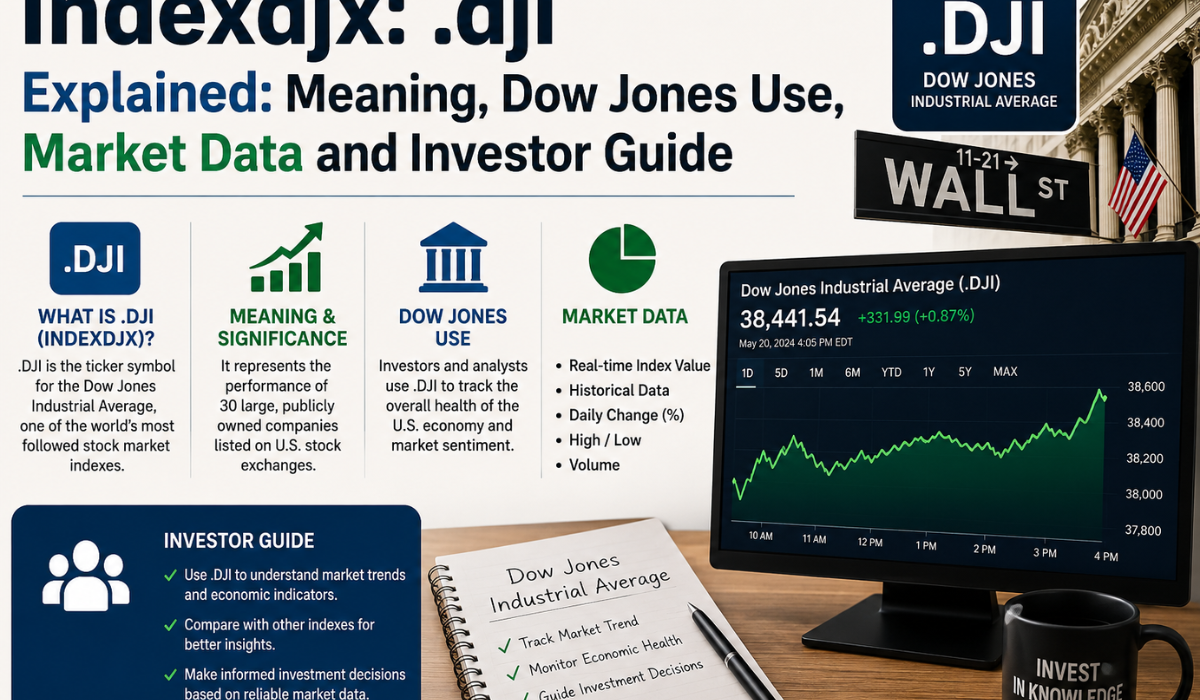
Indexdjx: .dji is not a company stock It is a market index symbol connected with the Dow Jones Industrial Average For readers, traders, and publishers, it helps identify one of the most watched U.S. stock market benchmarks.
Quick Bio
| Feature | Details |
|---|---|
| Core Definition | Indexdjx: .dji commonly refers to the Dow Jones Industrial Average listing format used on finance platforms. |
| Full Name | Dow Jones Industrial Average, often shortened to DJIA, Dow Jones, or the Dow. |
| Origin | First introduced in 1896 as a market average created to track major U.S. industrial companies. |
| Primary Use | Used to follow the performance of major U.S. blue-chip stocks. |
| Industry | Stock market, financial media, investing, trading, economic analysis, and business reporting. |
| Common Data Inputs | Component stock prices, index divisor, corporate actions, price changes, historical charts, and market feeds. |
| Popular Applications | Market news, chart analysis, economic headlines, portfolio tracking, ETFs, futures, options, and investor sentiment checks. |
What Does Indexdjx: .dji Mean?
What shows up as Indexdjx sometimes appears elsewhere as .dji – it’s just how certain systems tag the Dow Jones Industrial Average. Different platforms handle labeling in their own way, mixing index names with source markers. One place might use a dot prefix, another skips it entirely. The meaning stays fixed even if formatting shifts across tools.
Now here’s where .dji matters most – it stands for the Dow Jones Industrial Average. To tell it apart from regular stock symbols, people use Indexdjx since this isn’t just one company trading on a board. Instead, it tracks a whole group of them together.
Why Indexdjx: .dji Matters
People search for Indexdjx: .dji when they want fast Dow Jones data, chart movement, opening price, closing price, or market direction. It is especially common among users checking Google Finance, market dashboards, brokerage platforms, and financial news pages.
The Dow is often treated as a quick signal for the wider U.S. stock market. Even though it contains only 30 major companies, it still carries strong media influence because it has been quoted for more than a century.
Breaking Down the Symbol
The phrase Indexdjx: .dji can be understood in two parts. Indexdjx signals the index-data category, while .dji represents the Dow Jones Industrial Average ticker format.
This matters because a beginner may confuse it with a company ticker. A stock like Apple or Microsoft represents one company, but Indexdjx: .dji represents a basket of major U.S. companies combined into one market average.
Historical Origin of the Dow
The Dow Jones Industrial Average began in the late 19th century, when financial reporting was much simpler than it is now. Charles Dow wanted a practical way to measure how leading American businesses were performing.
At first, the index reflected the industrial character of the U.S. economy. Over time, its meaning expanded. Today, Indexdjx: .dji connects readers to companies across technology, finance, healthcare, consumer goods, industrials, and other major sectors.
How the Dow Jones Industrial Average Is Calculated
The Dow is a price-weighted index. That means higher-priced component stocks have more influence on index movement than lower-priced component stocks.
This is different from a market-cap-weighted index, where the largest companies by total market value usually carry the most weight. With Indexdjx: .dji, the price of each component stock plays a central role in daily movement.
Price-Weighted Logic in Plain English
Imagine one Dow component rises by several dollars while another rises by only a few cents. The dollar move matters more than the percentage move in a price-weighted structure.
That is why a high-priced Dow stock can move the index more strongly than a lower-priced company with a larger market value. This is one reason analysts often compare Indexdjx: .dji with the S&P 500 and Nasdaq Composite before making broad market judgments.
Core Data Inputs Behind Indexdjx: .dji
The main “materials” behind Indexdjx: .dji are not physical materials. They are financial data points.
The index depends on component stock prices, a special Dow divisor, corporate actions such as stock splits, and official index methodology. Chart platforms then turn that data into candles, line graphs, percentage changes, 52-week ranges, and historical performance views.
Modern Applications for Investors and Publishers
Investors use Indexdjx: .dji to check whether blue-chip U.S. stocks are rising or falling. Financial writers use it in headlines because readers instantly recognize the Dow as a market signal.
It is also useful for comparing investor mood. A rising Dow may suggest stronger confidence in established companies, while a falling Dow can signal pressure in major sectors of the U.S. economy.
For content publishers, related terms include Dow Jones today, DJIA chart, Dow futures, Dow 30 companies, U.S. stock market index, blue-chip stocks, and Wall Street market update.
How It Differs From S&P 500 and Nasdaq
Indexdjx: .dji tracks the Dow, which has 30 major U.S. companies. The S&P 500 tracks around 500 large U.S. companies, making it broader.
The Nasdaq Composite is more technology-heavy because it includes many companies listed on the Nasdaq exchange. The Dow is narrower, older, and more selective, which makes it useful but not complete on its own.
A smart market reader should compare all three. The Dow may rise while the Nasdaq falls, especially when technology stocks are under pressure but industrial or financial stocks are stronger.
Regional and Global Market Connection
Although Indexdjx: .dji is tied to the U.S. market, it is watched globally. Traders in Asia, Europe, the Middle East, and other regions often check Dow movement before or after U.S. trading hours.
Global investors also watch Dow futures before the New York session opens. These futures can influence early market expectations, although they do not guarantee where the Dow will close.
For international readers, the Dow often appears beside other benchmarks such as the FTSE 100, DAX, Nikkei 225, Hang Seng Index, and S&P/TSX Composite.
Commercial Variations and Tradable Products
You cannot directly buy Indexdjx: .dji like a normal stock because it is an index. However, investors can access Dow exposure through related financial products.
Common variations include Dow ETFs, DJIA futures, Dow options, and index-linked funds. These products are designed for different goals, from long-term tracking to short-term trading.
Popular searches around this topic include Dow Jones ETF, DIA ETF, E-mini Dow futures, Dow options, and DJIA historical performance.
Common Misreadings and Investor Mistakes
One common mistake is assuming Indexdjx: .dji represents the whole stock market. It does not. It represents 30 selected blue-chip companies.
Another mistake is reacting to one-day movement without checking sector leadership, inflation data, Federal Reserve news, earnings reports, or global events. The Dow is useful, but it should be read with context.
Beginners should also remember that an index quote is not investment advice. It is a market measurement tool.
Future Trends Around Dow Tracking
Now it’s different when people keep up with Indexdjx: .dji. Checking stock updates feels smoother through phone apps made for money tracking. Some tools use artificial intelligence to shrink long reports into quick insights. Live screens update without needing a refresh button. Notifications arrive the moment numbers shift. Reading about the Dow does not take so much effort anymore. Picture this – watching markets could soon mean seeing real-time visuals flow across screens, layered with crowd density patterns that show where activity clusters. Heat in certain zones might tell stories words can’t. Past moves may line up beside today’s action, offering context without clutter. When things shift, the why might come through risk lenses instead of guesses. Through it all, one thing sticks: icons matter. Folks still reach for familiar markers when sorting noise from signal.
FAQs About Indexdjx: .dji
1. What is Indexdjx: .dji?
Indexdjx: .dji is a finance-platform label connected with the Dow Jones Industrial Average. It helps users find Dow data, charts, price movement, and market information.
2. Is Indexdjx: .dji a stock I can buy?
No. Indexdjx: .dji is not a single company stock. It represents an index. Investors usually gain Dow exposure through ETFs, futures, options, or funds that track the Dow.
3. Why does the Dow matter if it has only 30 companies?
The Dow matters because its companies are large, established, and widely followed. It also has deep historical importance and strong media recognition, so many investors use it as a quick market signal.
4. How is Indexdjx: .dji different from the S&P 500?
Indexdjx: .dji follows the Dow’s 30 blue-chip companies and uses a price-weighted method. The S&P 500 is much broader and uses market-cap weighting, so it often gives a wider view of the U.S. stock market.
5. Why do finance platforms show different formats for the Dow symbol?
Different platforms use different symbol structures. Some show .DJI, others show DJIA, ^DJI, or a format like Indexdjx: .dji. These variations usually point to the same Dow Jones Industrial Average data.
Conclusion
Indexdjx: .dji is best understood as a market-data symbol for the Dow Jones Industrial Average, one of the most recognized stock market benchmarks in the world. It helps users track blue-chip U.S. stocks, read market direction, compare major indexes, and understand financial headlines faster. For the best results, do not read the Dow alone. Compare it with the S&P 500, Nasdaq Composite, Dow futures, sector performance, earnings news, interest-rate updates, and global market signals. That gives a clearer, more useful picture than any single index quote can provide.
Disclaimer:
This article is for informational and educational purposes only. It does not provide financial, investment, trading, or legal advice. Stock market indexes such as Indexdjx: .dji and the Dow Jones Industrial Average can change due to market conditions, economic news, and investor sentiment. Always do your own research or consult a qualified financial advisor before making any investment or trading decision.
Also Read:> Indexdjx: .dji Explained: Meaning, Dow Jones Use, Market Data and Investor Guide

The Per-Seat Software Bill Is the New Rent, and Small Digital Businesses Have Quietly Started Refusing to Pay It

Pink Nike Tech: Complete Style, Fit, Buying, and Outfit Guide

Ultrasound Tech Salary California: Complete Pay Guide by City, Experience, Specialty, and Career Path

-

 Fashion9 years ago
These ’90s fashion trends are making a comeback in 2017
-
Entertainment9 years ago
The final 6 ‘Game of Thrones’ episodes might feel like a full season
-
Fashion9 years ago
According to Dior Couture, this taboo fashion accessory is back
-
Entertainment9 years ago
The old and New Edition cast comes together to perform
-
Sports9 years ago
Phillies’ Aaron Altherr makes mind-boggling barehanded play
-
Sports9 years ago
Steph Curry finally got the contract he deserves from the Warriors
-
Business9 years ago
Uber and Lyft are finally available in all of New York State
-
Entertainment9 years ago
Disney’s live-action Aladdin finally finds its stars