Uncategorized
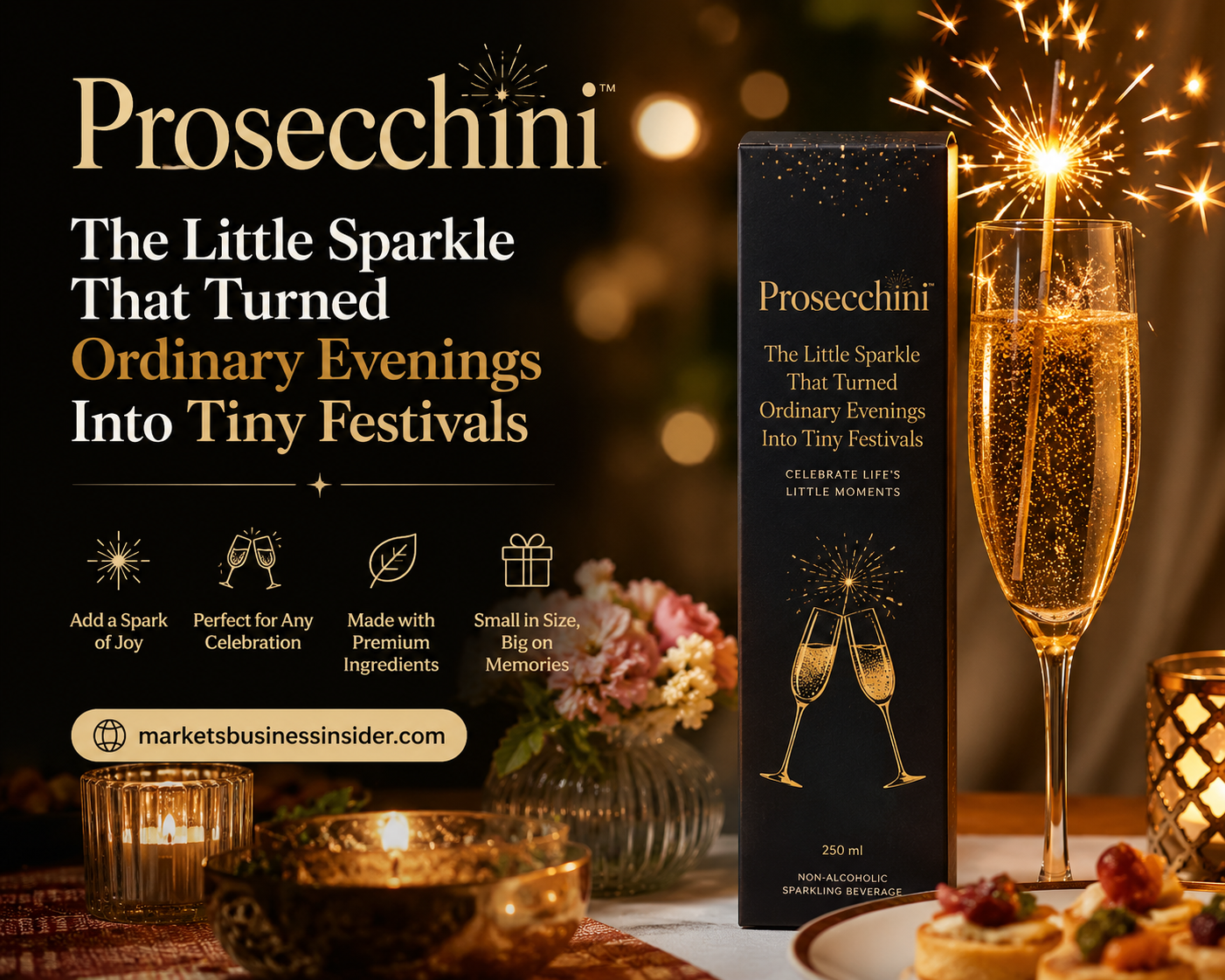
Prosecchini: The Little Sparkle That Turned Ordinary Evenings Into Tiny Festivals

Introduction: Why Prosecchini Feels Like a Tiny Doorway
There’s a funny thing about small pleasures: they rarely announce themselves with fireworks. They don’t kick the door open wearing a velvet cape. More often, they arrive quietly, almost shyly, sitting on the kitchen counter while the kettle grumbles, the afternoon light slants across the tiles, and somebody says, “Well, why not?”
That’s the mood this little sparkling idea belongs to. Not grand luxury. Not polished marble, icy chandeliers, and people pretending to understand abstract sculpture. No, this is more intimate than that. It’s the wink before dinner, the clink before gossip, the fizzy punctuation mark at the end of a long Thursday.
And honestly, isn’t that where life actually happens?
Not in the gigantic milestones everyone photographs to death, but in the bits between them: opening a window after rain, eating bread too warm to slice properly, surviving a meeting without saying what you really thought, finding a parking spot so perfect it feels suspicious. Those are the moments that need a little ceremony. Not a parade. Just enough sparkle to make the ordinary sit up straighter.
The Romance of Small Things
We live in a culture obsessed with bigger. Bigger launches, bigger kitchens, bigger opinions, bigger coffee cups that look like they require planning permission. Everything has to be optimized, upgraded, maximized, monetized, and slapped into a ten-step system by someone with a ring light.
But small things have teeth.
A handwritten note can outlive a dozen emails. A single flower in a chipped glass can soften a whole room. One honest sentence can rescue a friendship from years of polite fog. Smallness isn’t weakness. It’s concentration.
That’s why tiny rituals matter. They give shape to days that otherwise blur into laundry, notifications, and half-finished errands. A small pour, a small toast, a small pause before rushing into the next thing can feel oddly rebellious. It says, “Nope, we’re not letting this day vanish without leaving a fingerprint.”
Dangling between routine and celebration, somehow, life gets brighter.
A Table Doesn’t Need to Be Fancy to Feel Alive
Here’s the truth nobody wants to print on expensive hosting magazines: most memorable evenings don’t happen because the napkins matched.
They happen because someone laughed too hard. Because the soup was nearly too salty but saved by lemon. Because two guests who “had nothing in common” ended up arguing passionately about train stations, horror films, or whether pears are underrated. Because someone brought a terrible dessert and everyone ate it anyway.
A good table has movement. It has elbows, crumbs, interruptions, and someone reaching across for more olives. It doesn’t need to look staged. In fact, the more staged it looks, the less anyone wants to breathe near it.
If you’re building a small gathering, think in textures, not perfection:
- Something crisp
- Something creamy
- Something salty
- Something fresh
- Something that makes people ask, “Wait, what’s in this?”
- Something playful enough to loosen the room
That’s it. That’s the whole circus.
The New Kind of Celebration
Celebration used to be treated like a formal appointment. Birthdays, weddings, promotions, anniversaries, graduations. Fine, sure, those deserve attention. But what about smaller victories?
What about:
- Finally booking the dentist appointment?
- Ending a subscription that had been quietly stealing money for eight months?
- Cooking instead of ordering takeout?
- Not texting someone who definitely didn’t deserve a sequel?
- Cleaning the fridge and discovering no new life forms?
- Saying “I need help” without turning it into a joke?
- Getting through a week that behaved like a raccoon in a filing cabinet?
Those deserve a little bell-ringing too.
The modern celebration is less about showing off and more about noticing. It doesn’t ask, “How impressive is this?” It asks, “Can we make this moment feel less disposable?”
That’s a better question.
Flavor as Memory’s Favorite Trick
Taste has a sneaky way of kicking doors open in the brain. One sip, one bite, one scent, and suddenly you’re fourteen again, sitting on a plastic chair at somebody’s cousin’s house, listening to adults discuss things you weren’t supposed to understand.
A pear note can become autumn. A lemony edge can become a seaside afternoon. A clean mineral finish can become that one summer where everyone was sunburned, broke, and weirdly happy.
Flavor doesn’t just decorate memory. It files it.
That’s why what we serve matters, even casually. Not because we need to impress anyone, but because we’re building emotional bookmarks. Later, someone may not remember the exact menu. They might not remember the playlist. But they’ll remember the feeling: light, bubbly, unforced, warm around the edges.
And that, frankly, is better than a perfect centerpiece.
How to Build a Tiny Festival at Home
You don’t need a huge budget or a dining room large enough to host a minor diplomatic summit. You need intention, a few good ingredients, and the courage to stop apologizing for your home looking lived in.
Start with atmosphere. Open the curtains before people arrive. Or close them and light lamps if the evening is moody. Kill the overhead light unless you want everyone to feel like they’re being interviewed by airport security. Put music on, but not so loud that people have to shout their personalities across the room.
Then, set out food before guests ask for it. Hungry guests become strange little wolves.
A simple spread works beautifully:
- Toasted bread with olive oil
- Soft cheese or whipped ricotta
- Roasted nuts with rosemary
- Thin slices of fruit
- Pickled vegetables
- Good crackers
- A bowl of something salty and snackable
- Dark chocolate broken into rough pieces
No need to perform culinary gymnastics. A relaxed host is worth more than six complicated sauces.
Pairing Without Becoming Insufferable
Pairing food and drink can be fun, but some people manage to turn it into a courtroom proceeding. Don’t be that person. Nobody should need a glossary just to enjoy a snack.
The basic idea is simple: balance.
If something is salty, bring in freshness. If something is creamy, add brightness. If something is rich, give it a clean contrast. If something is sweet, make sure there’s acidity or bitterness nearby so the whole thing doesn’t collapse into syrupy chaos.
Try combinations like:
- Soft cheese with honey and cracked pepper
Creamy, sweet, sharp, and just dramatic enough. - Green olives with citrus zest
Briny and bright, like a tiny Mediterranean argument. - Potato chips with crème fraîche
Ridiculous? Yes. Excellent? Also yes. - Pear slices with aged cheese
Gentle, elegant, and unlikely to start a fight. - Fried snacks with something crisp
Because bubbles and crunch are old friends.
The secret is not to overthink it. Taste, adjust, eat another piece “for research,” and move on.
The Psychology of the First Pour
The first pour changes the room.
Before it, people are arriving, adjusting, checking phones, asking where to put coats. After it, shoulders drop. Voices warm up. Someone makes the first slightly risky joke. The evening has officially begun.
That’s not magic. It’s ritual. Humans are ritual machines. We pretend we’re modern and rational, but give us a repeated gesture with symbolic meaning and we’ll follow it straight into emotional territory.
A toast doesn’t have to be grand. In fact, grand toasts can become unbearable if the speaker gets trapped in their own importance. Keep it brief.
Try:
- “To making it through the week.”
- “To good timing.”
- “To small wins.”
- “To being here.”
- “To whatever happens next.”
Simple. Clean. Done.
When Alone Counts Too
Celebration doesn’t require an audience.
That’s worth saying twice, but we won’t, because repetition is lazy and you asked for natural writing.
There’s a particular kind of dignity in making one person’s evening feel considered. Cooking yourself a proper plate. Using the nice glass. Turning off the screen while you eat. Sitting down instead of hovering over the counter like a haunted office worker.
People often save beauty for company, which is quietly tragic. Your own life is not a waiting room. You’re allowed to make it lovely without witnesses.
A solo ritual can be tiny:
- Wash your face and change into something comfortable.
- Put on music that doesn’t bully the room.
- Plate your food properly.
- Pour something chilled.
- Read three pages of a book.
- Let the night be enough.
No announcement required. No caption. No proof.
Hosting Without Turning Into a Nervous Weather System
Some hosts become storms. They whirl through the room adjusting cushions, refilling glasses too aggressively, apologizing for imaginary flaws, and asking every seven minutes whether people are okay.
People are okay. Let them sit.
Good hosting isn’t control. It’s permission. Permission to relax, to eat, to talk, to drift, to be a little messy. The best hosts create a room where nobody feels watched.
A few practical rules help:
- Prepare one thing ahead.
Not everything. One thing. Future-you will be grateful. - Have more ice than you think you need.
Ice disappears like gossip. - Don’t test a complicated recipe on guests.
That road leads to sweating, swearing, and emergency pasta. - Give people something to do only if they ask.
Some guests love helping. Others look terrified when handed tongs. - Let silence happen.
Not every pause is a social sinkhole.
Relaxed imperfection beats polished panic every single time.
The Beauty of Not Overexplaining
There’s a charming confidence in serving something without delivering a lecture.
You don’t need to explain the origin story of every ingredient. You don’t need to announce that the almonds were ethically harvested by moonlight or that the cheese has “notes of hay, cellar stone, and distant regret.”
Just serve it. Let people discover it.
Of course, if someone asks, talk. Enthusiasm is delightful when invited. But unsolicited expertise can flatten a room quicker than bad lighting.
The best experiences leave room for people to bring themselves to the table. Their tastes, stories, jokes, and appetites. That’s the whole point.
FAQs
What makes a small celebration feel special?
Attention. That’s the plain answer. It’s not about price, rarity, or showing off. A small celebration feels special when someone has clearly paused long enough to care about the details.
Do I need fancy glassware?
No. Nice glassware can help, but it’s not mandatory. Use what you have. A clean, simple glass beats a dusty crystal flute pulled from the back of a cabinet like an ancient artifact.
What foods work best for a casual sparkling moment?
Crisp, salty, creamy, and fresh foods usually work well. Think cheese, fruit, nuts, chips, olives, roasted vegetables, seafood bites, or light pastries. Keep things easy to pick up and eat.
Can this kind of ritual work on a weeknight?
Absolutely. Actually, weeknights may need it most. The trick is to keep the ritual short and low-effort. Ten intentional minutes can change the emotional weather of an entire evening.
Is it better for parties or quiet nights?
Both. For parties, it creates a cheerful opening note. For quiet nights, it turns solitude into something softer and more deliberate. Different stage, same little spotlight.
How do I stop overthinking hosting?
Remember that guests mostly want warmth, food, and ease. They’re not inspecting your baseboards. Feed them, welcome them, and stop narrating everything you think went wrong.
Conclusion: The Small Spark Is Still a Spark
Life doesn’t always hand us grand occasions. Sometimes it hands us Tuesday, a sink full of spoons, and a mood that could curdle milk. Waiting for perfect circumstances before celebrating is a losing game. Perfect circumstances are unreliable guests.
So make smaller doors into joy.
Pour something bright. Slice the pear. Put chips in a bowl instead of eating them from the bag, unless the bag is part of the mood, in which case carry on. Invite two friends. Or invite none. Toast the repaired hinge, the sent email, the survived phone call, the rain stopping at exactly the right second.


The Per-Seat Software Bill Is the New Rent, and Small Digital Businesses Have Quietly Started Refusing to Pay It

Pink Nike Tech: Complete Style, Fit, Buying, and Outfit Guide

Ultrasound Tech Salary California: Complete Pay Guide by City, Experience, Specialty, and Career Path

-

 Fashion9 years ago
These ’90s fashion trends are making a comeback in 2017
-
Entertainment9 years ago
The final 6 ‘Game of Thrones’ episodes might feel like a full season
-
Fashion9 years ago
According to Dior Couture, this taboo fashion accessory is back
-
Entertainment9 years ago
The old and New Edition cast comes together to perform
-
Sports9 years ago
Phillies’ Aaron Altherr makes mind-boggling barehanded play
-
Sports9 years ago
Steph Curry finally got the contract he deserves from the Warriors
-
Business9 years ago
Uber and Lyft are finally available in all of New York State
-
Entertainment9 years ago
Disney’s live-action Aladdin finally finds its stars